
The Global Citizen
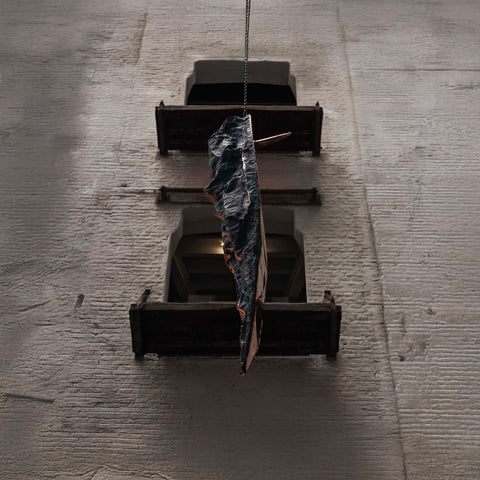
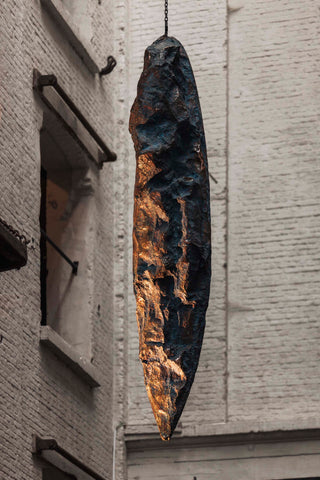
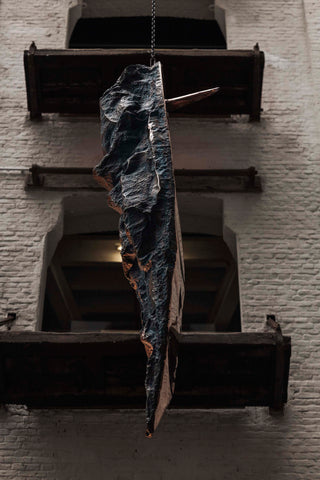
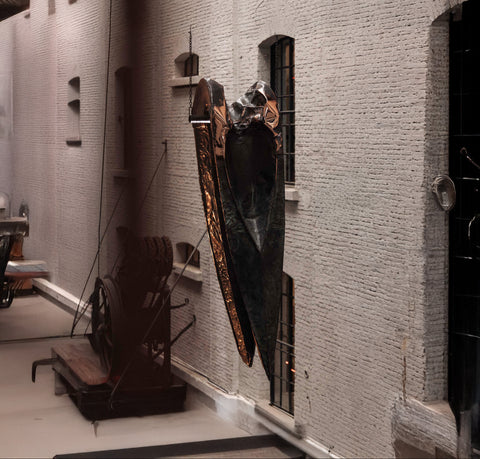
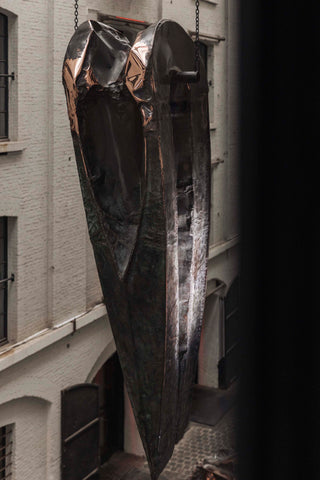
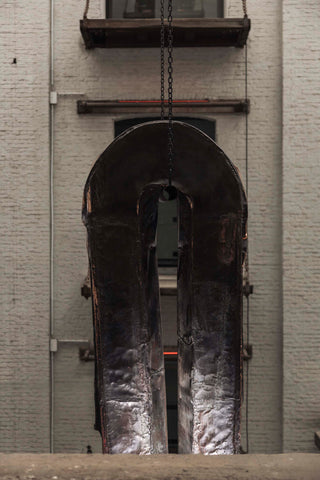
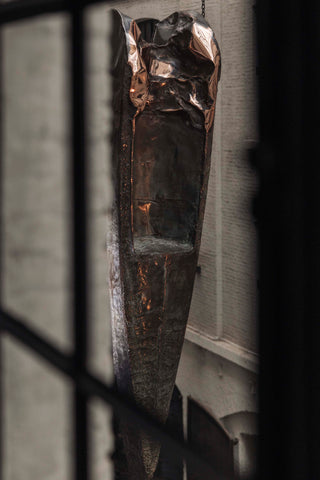
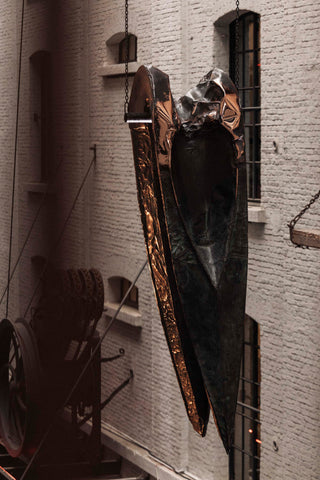
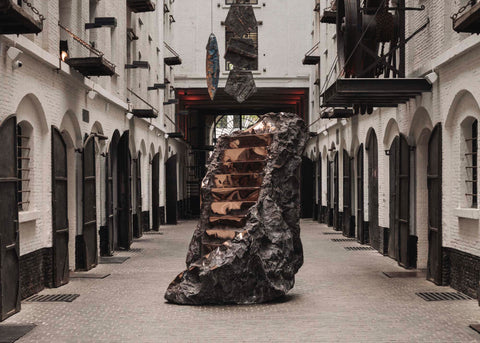
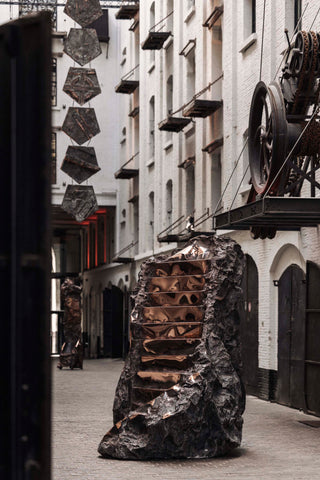
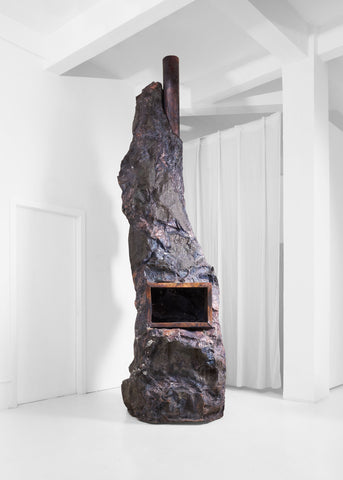
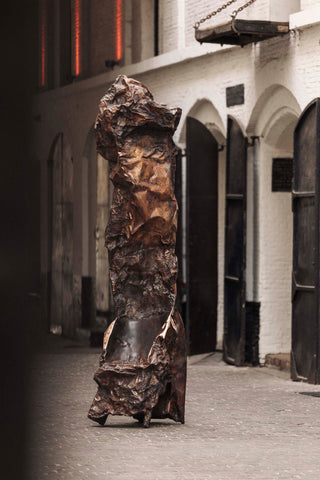
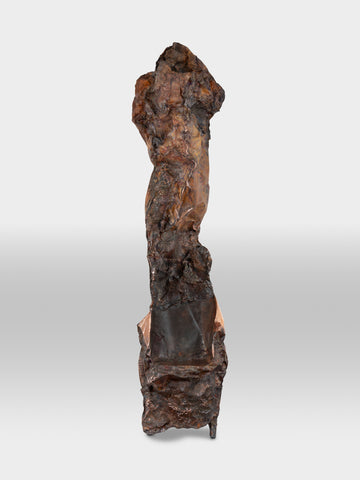
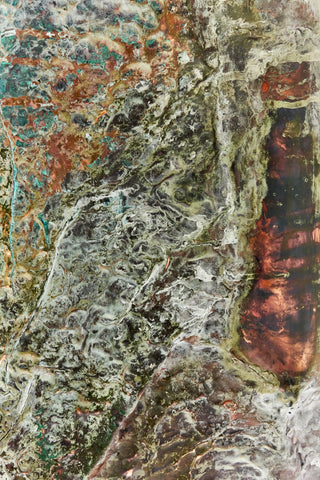
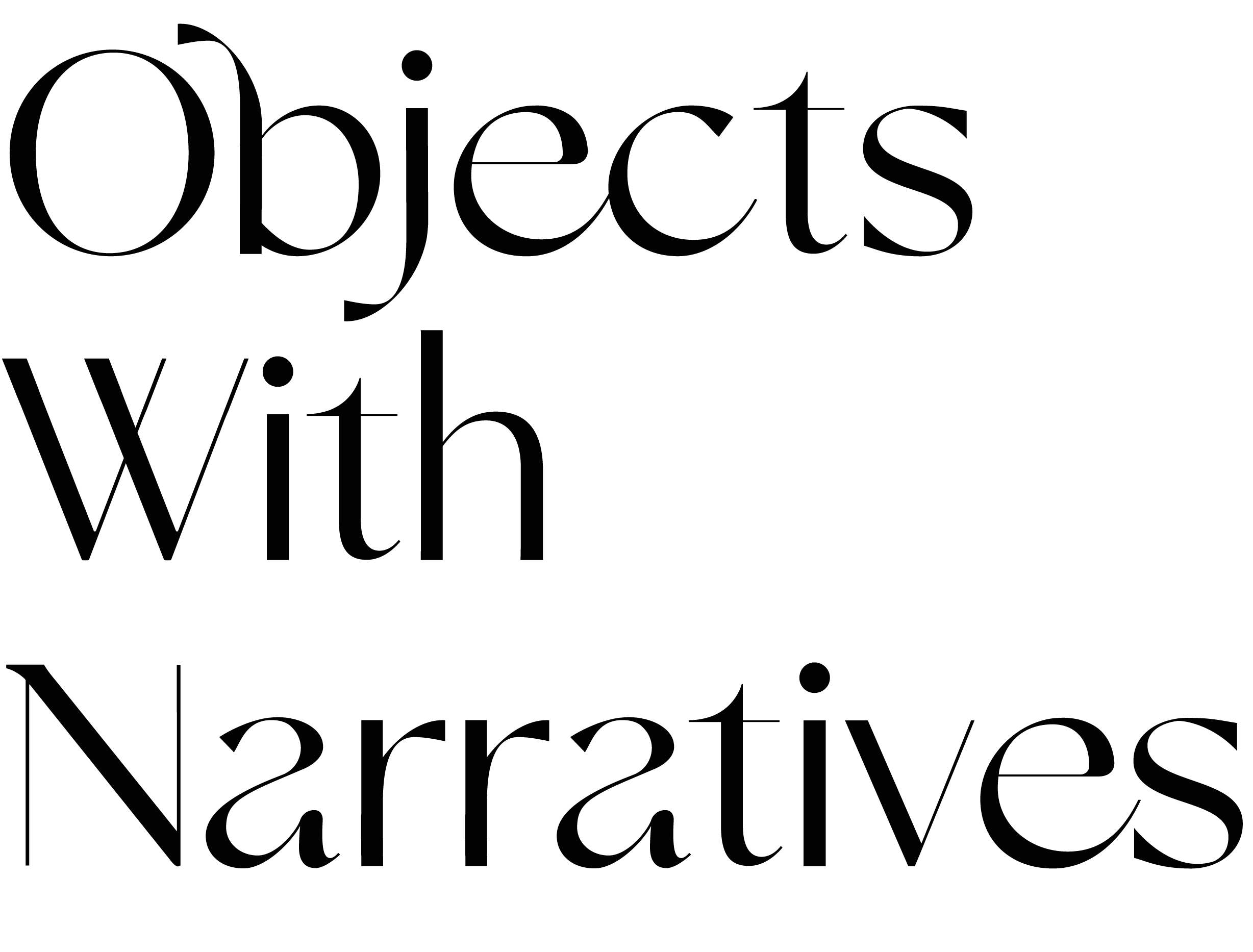
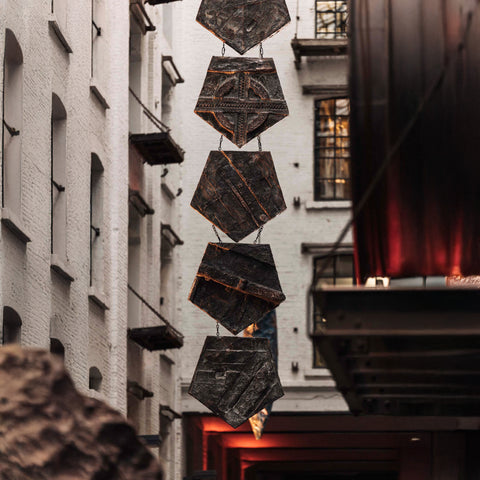
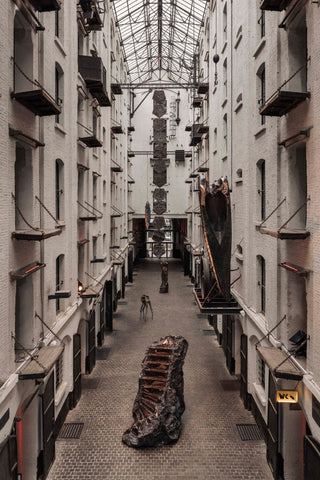
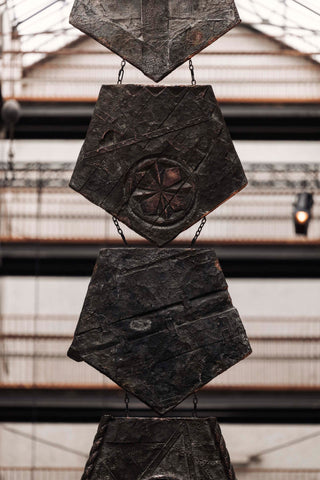
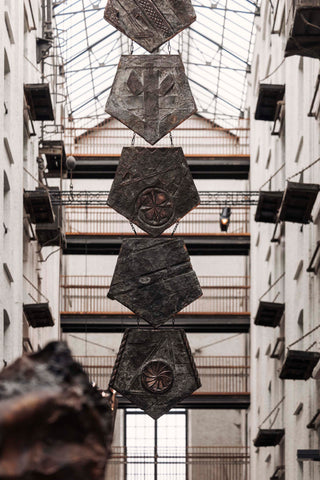
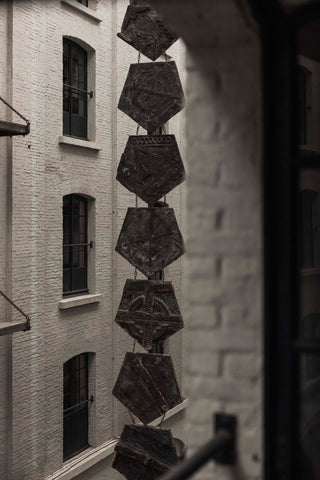
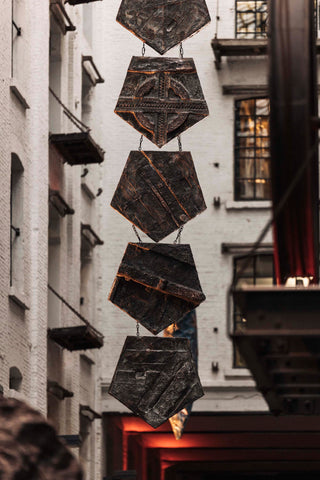
A vertical constellation of copper forms: twelve pentagons, each marked with mysterious reliefs, as if bearing the memory of lost civilizations or celestial diagrams. They hover one beneath another like fragments of a broken code. And yet there is a secret geometry hidden within them: if these twelve pieces were ever reunited, their edges would close perfectly into a single solid — a dodecahedron, the ancient shape that philosophers once believed described the structure of the cosmos itself. One begins to imagine that this was once a game the gods played — separating the universe into pieces, scattering them through space, and leaving them hanging here in quiet suspension, waiting for some future intelligence to understand how the cosmos was folded apart.
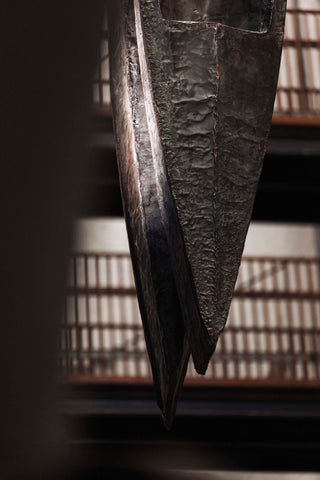
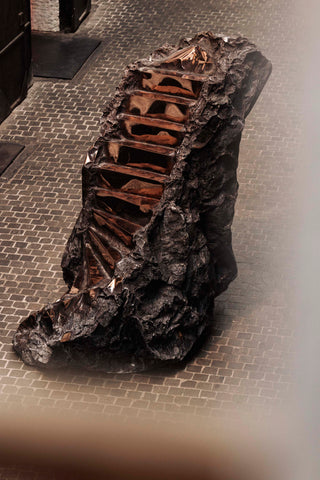
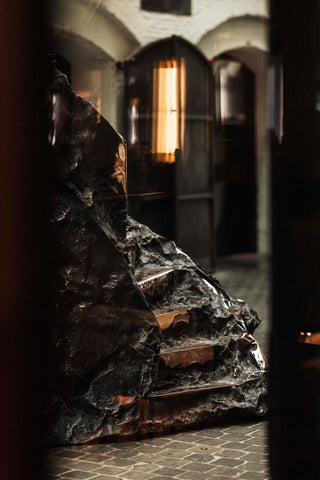
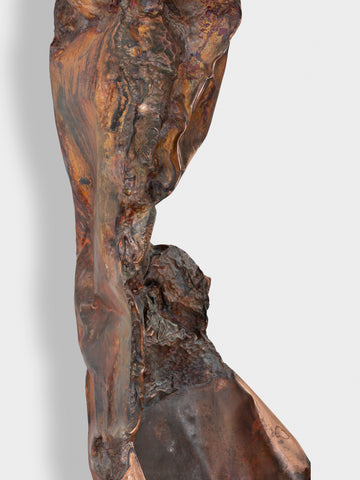
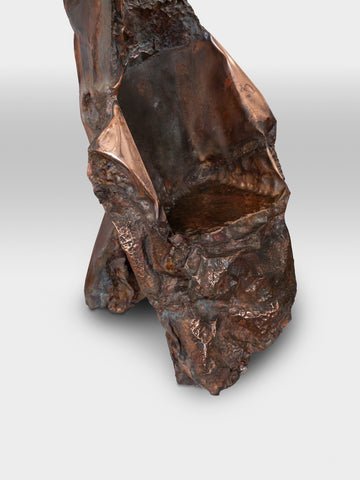
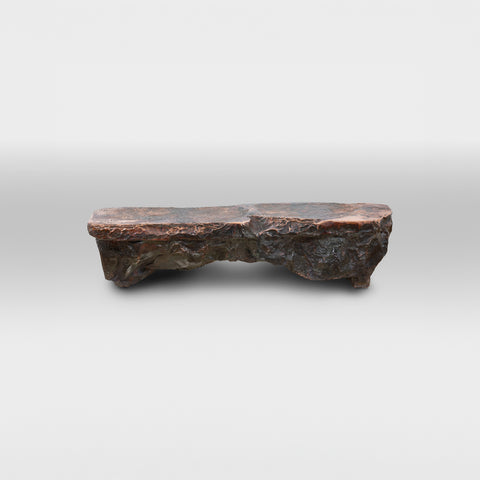
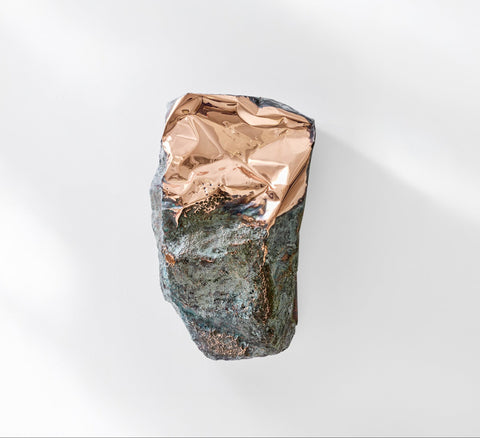
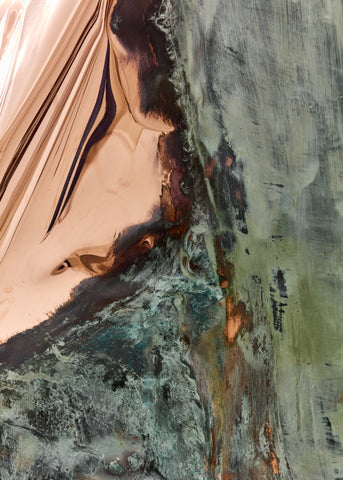
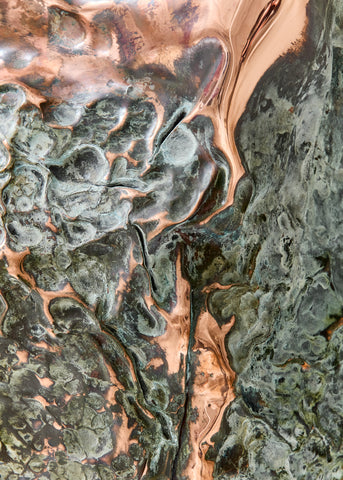
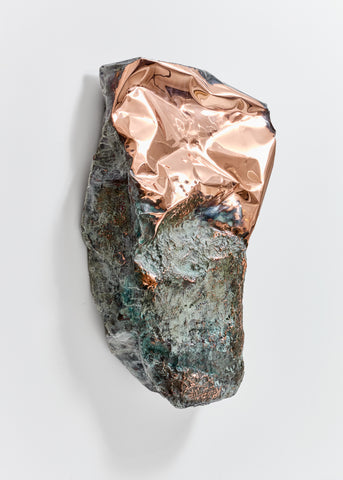
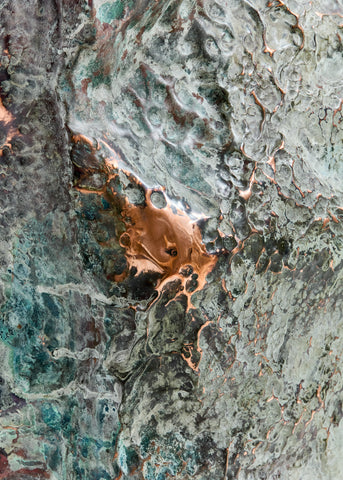
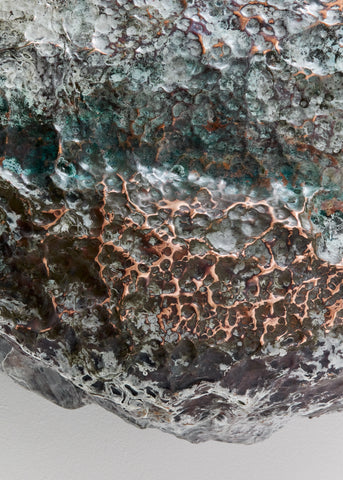
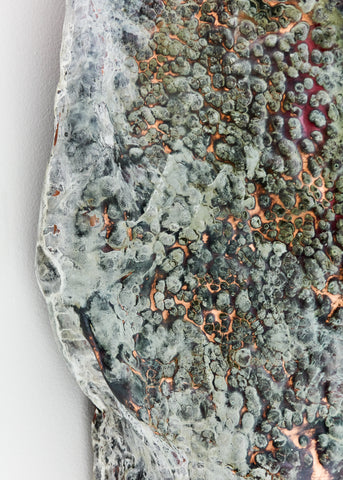
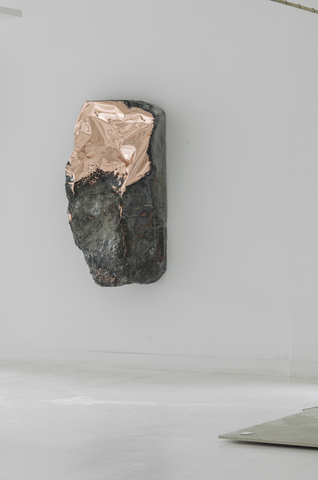
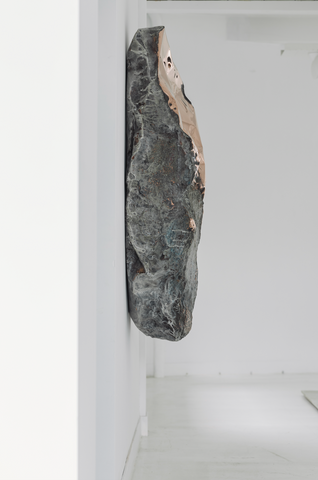
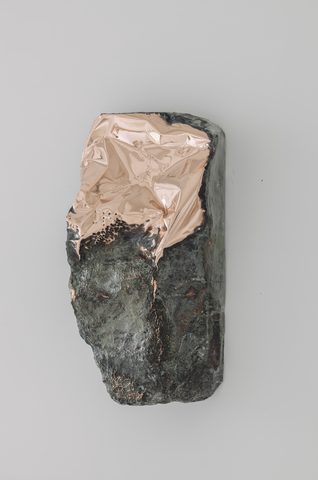
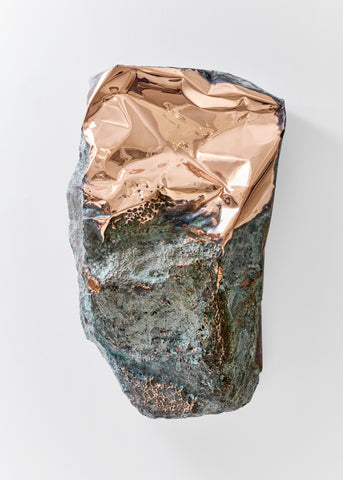
Each pentagon is made out of hand carved wood from Maramureș, Romania (the artist’s country of origin) covered with hammered Belgian copper plates (the artist’s adoptive country). Among these plates are vintage pieces like the one bearing the portrait of Peter Paul Rubens, its surface glowing with time’s patina, its ornamental border curling like a baroque whisper. The artist collected around one hundred such copper plates from flea markets across Belgium over the course of a single year, gathering them like scattered echoes of domestic histories — objects once decorative, now reassembled into a new cosmology.
The carved wood was collected from Maramureș, Romania, a UNESCO-protected region praised for its unique carved wooden houses and churches. Over the years, furniture companies depleted the region of some of these houses, demolishing them and exporting the wood to be used for expensive flooring. The artist spent several months collecting found carved and uncarved wood remnants from these demolitions. In his studio in Antwerp, he assembled the wood into pentagons, carving the plain surfaces himself using pre-Christian symbols found on the original pieces. Thus, the twelve resulting pentagons carry a layered language: part inherited, part reimagined.
By using these two materials, each deeply rooted in the traditions and histories of their respective countries, the artist creates a dialogue that feels less like fusion and more like a quiet alignment — two cultural gravities finding balance without dissolving into one another, forming instead a richer, orbiting whole.