
Forest Fruits
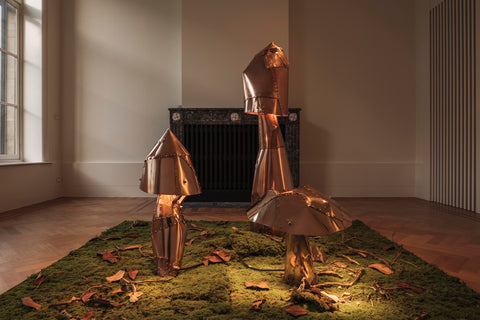
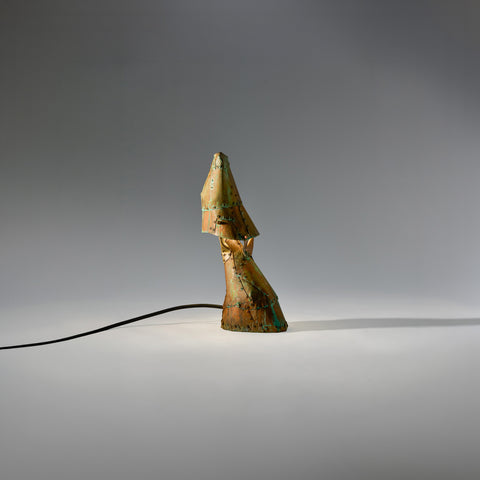
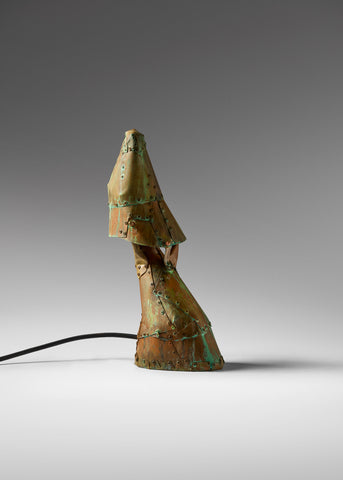
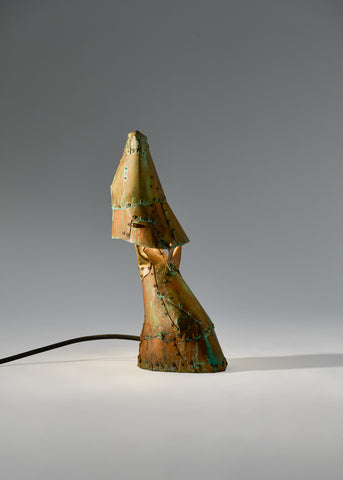
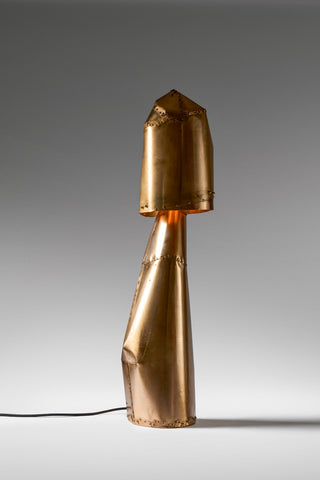
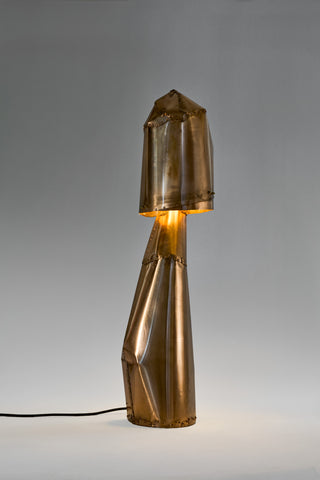
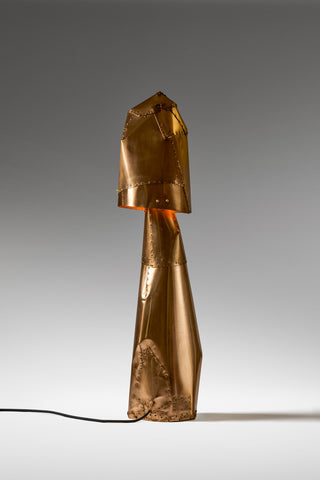
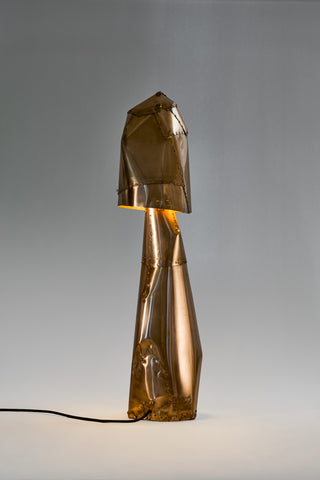
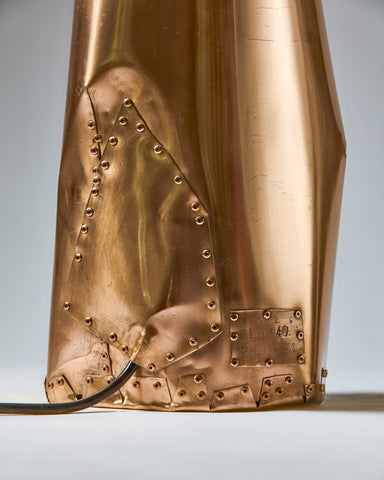
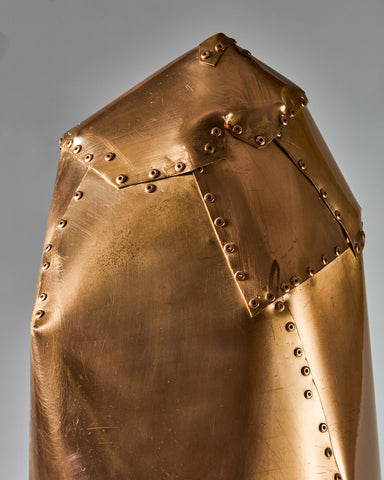
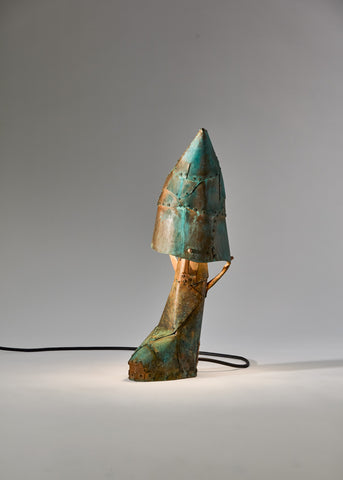
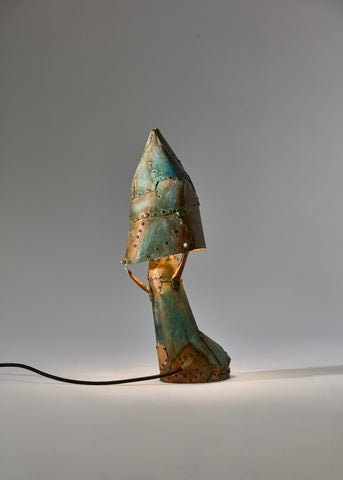
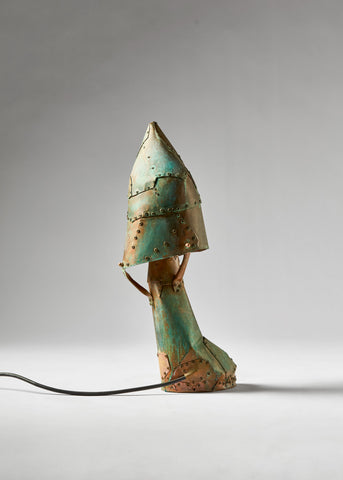
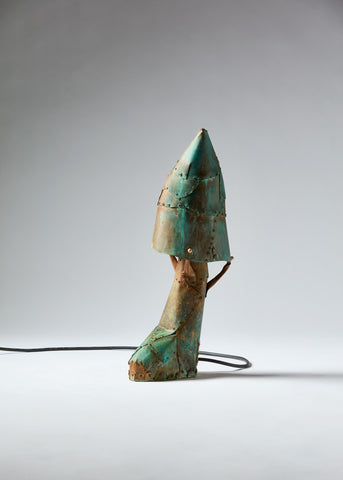
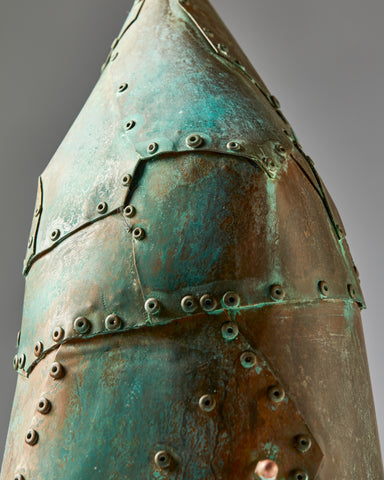
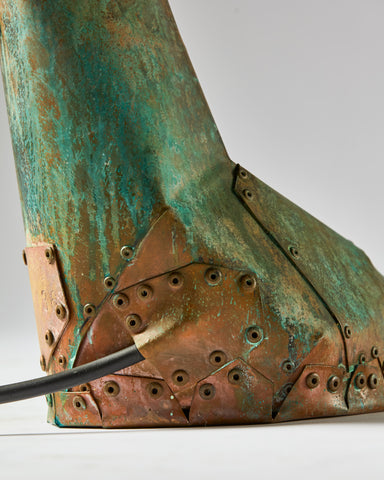
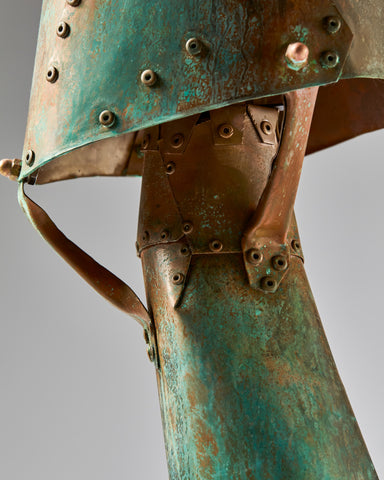
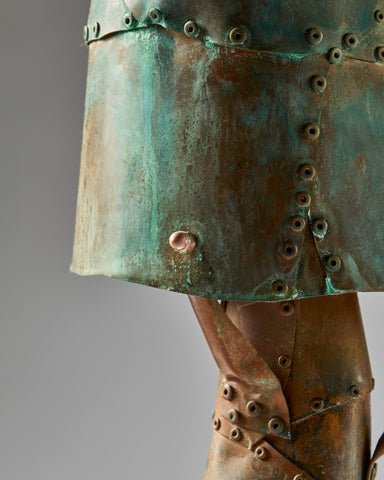
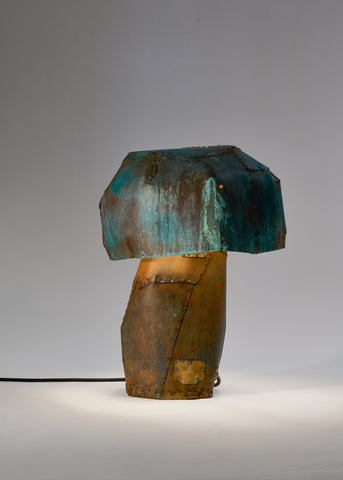
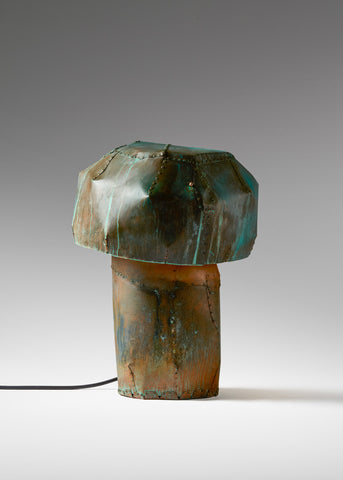
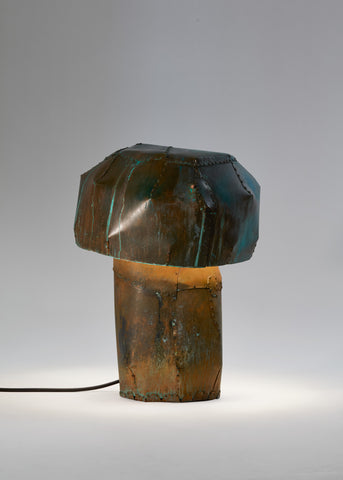
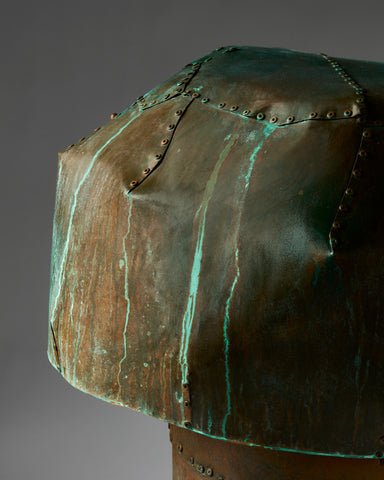
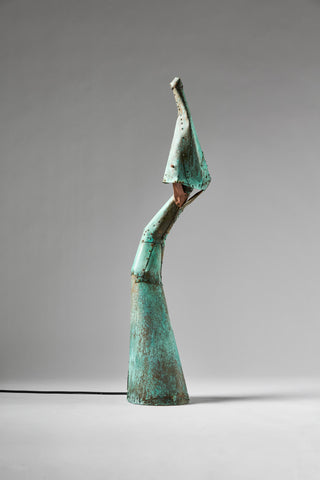
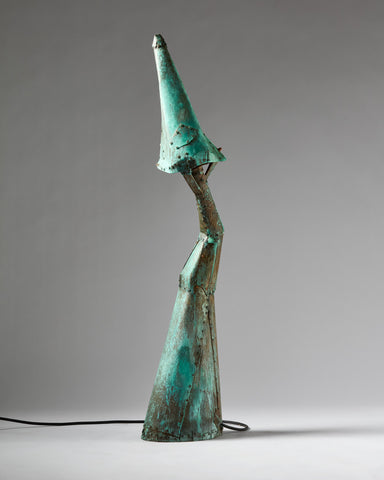
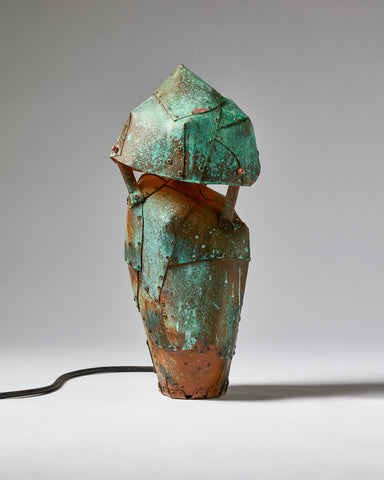
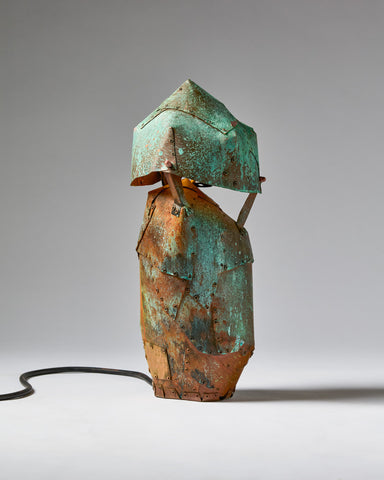
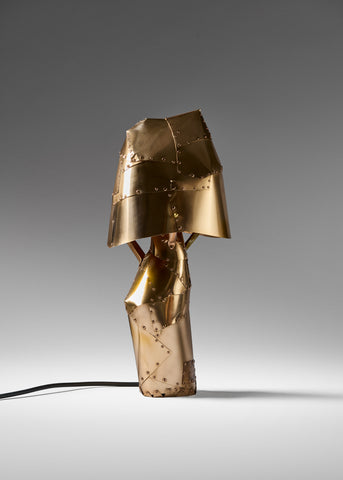
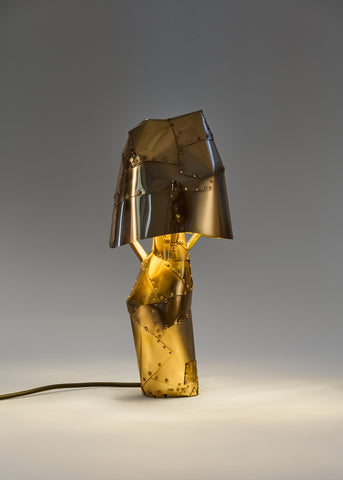
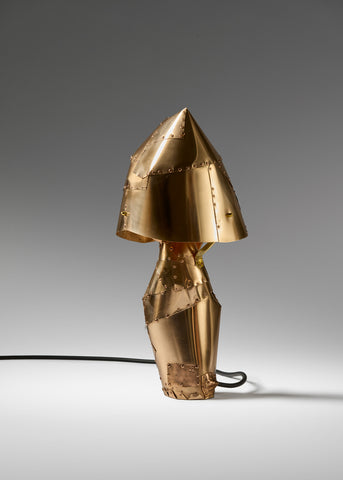
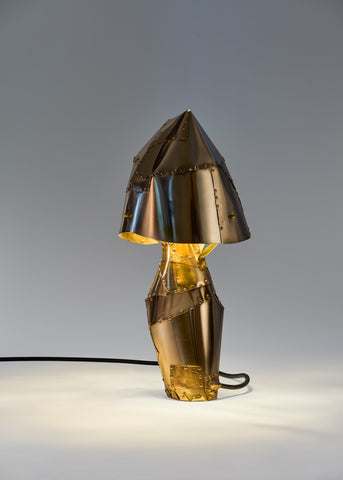
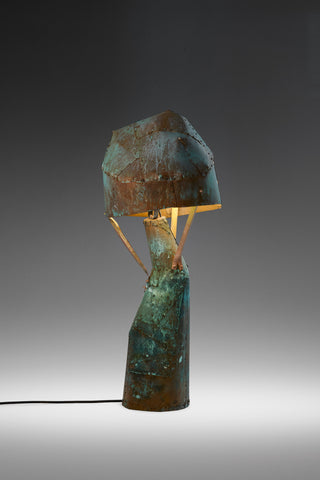
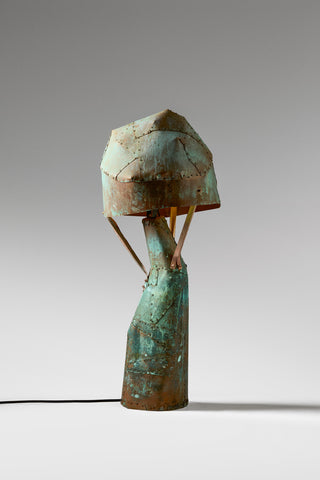
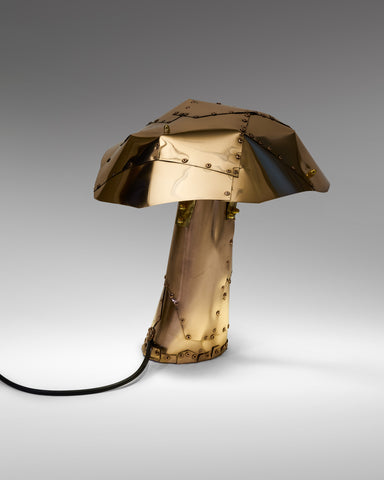
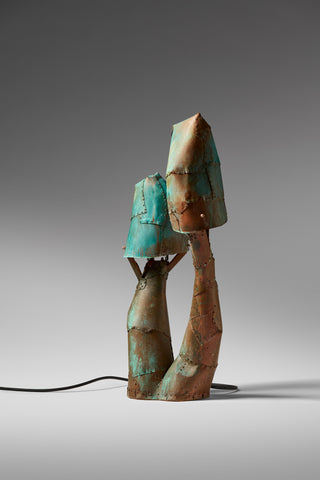
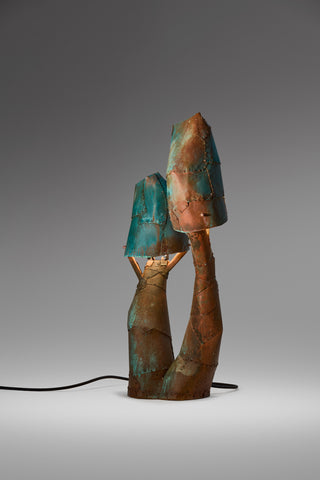
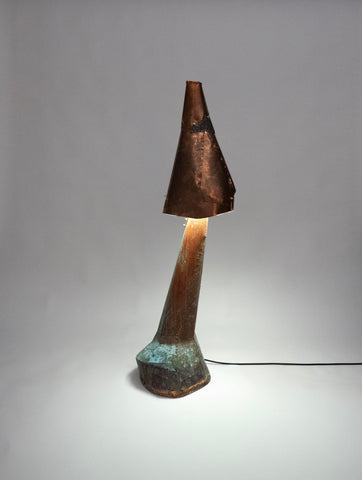
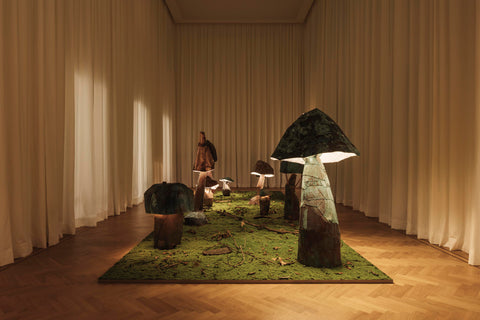
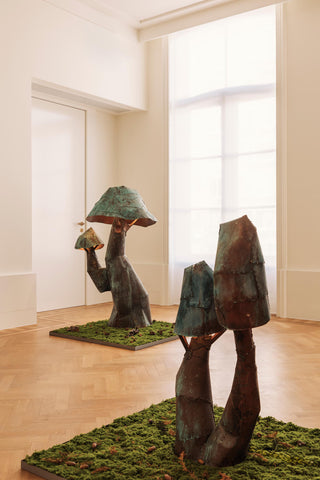
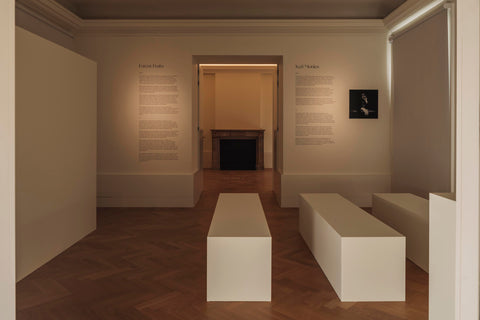
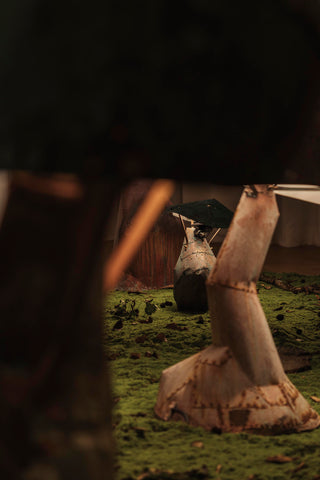
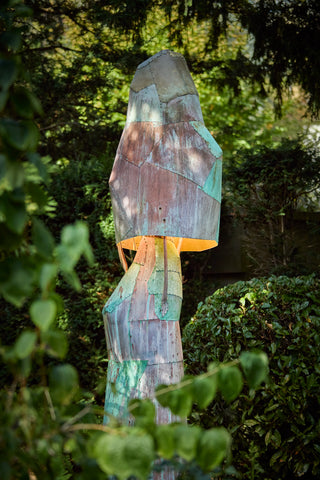
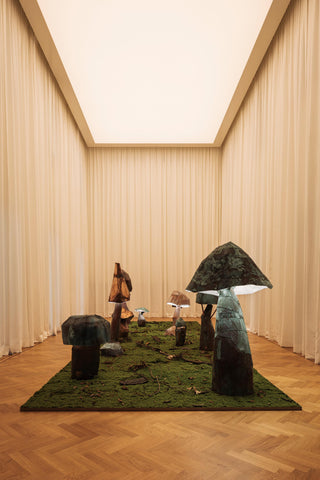
In Forest Fruits, Karl Monies transforms the gallery into an imagined forest floor. Illuminated metal bodies emerge throughout the space like unfamiliar growths, each with its own posture, scale and presence. They resemble mushrooms but reproduce no identifiable species, suspended between organism and machine, sculpture and lamp.
The title refers to the mushroom as the fruiting body of a fungus: a temporary, visible expression of a much larger organism that remains largely hidden underground. Monies' sculptures occupy a comparable position, complete objects that nonetheless suggest something extending beyond their visible boundaries, standing in for processes that cannot be directly observed: inner development, memory, connection, adaptation.
Monies is drawn to fungi's abilities to spread, branch, respond, communicate and adapt, finding a poetic correspondence between these behavioural systems and human participation in larger social and ecological structures. The sculptures accordingly develop like organisms rather than fixed images: beginning without a fully determined form, reacting to circumstance, acquiring individual character, and continuing to change after leaving the artist's hands. Monies begins each work with intuitive play, allowing materials and mistakes an active role, before shifting into a more deliberate phase: observing what has emerged much as a botanist studies an unfamiliar specimen.
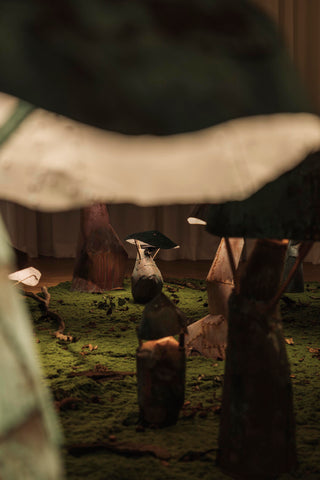
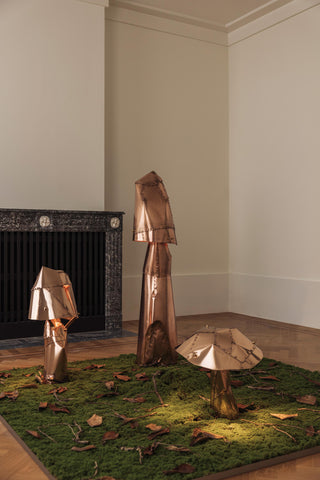
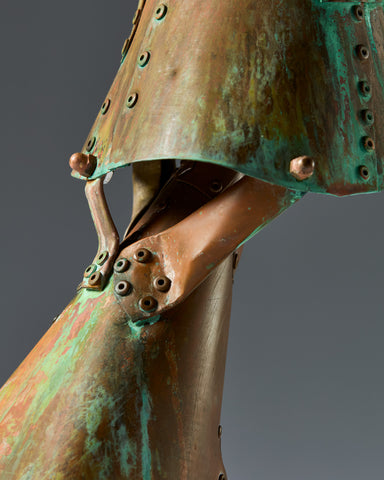
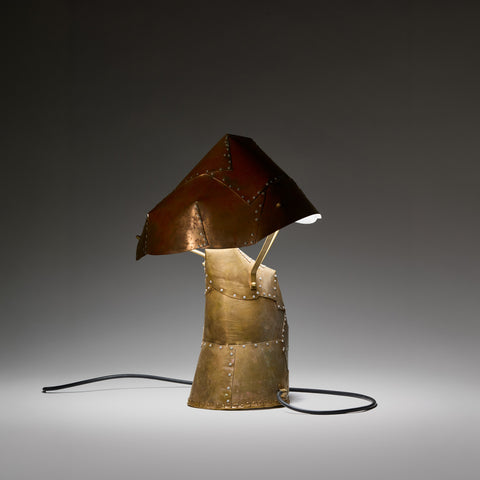
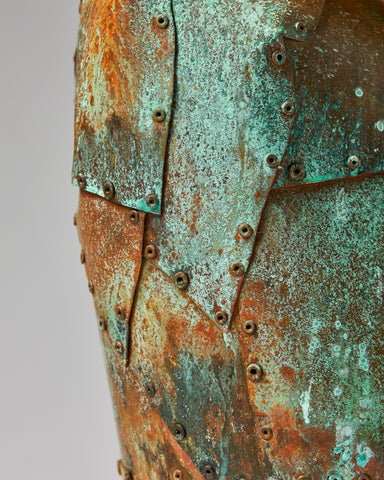
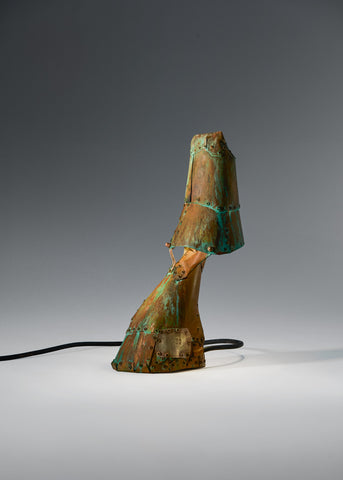
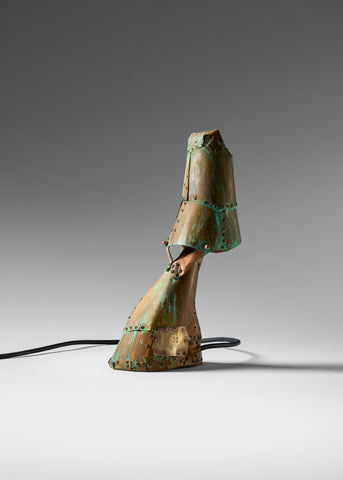
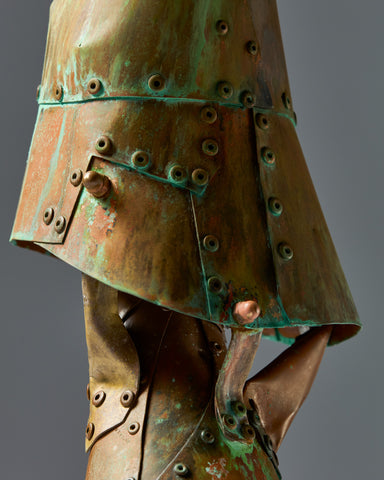
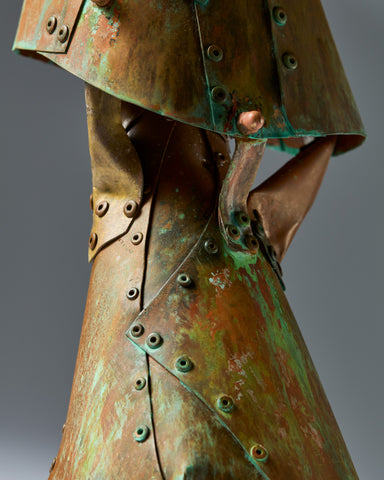
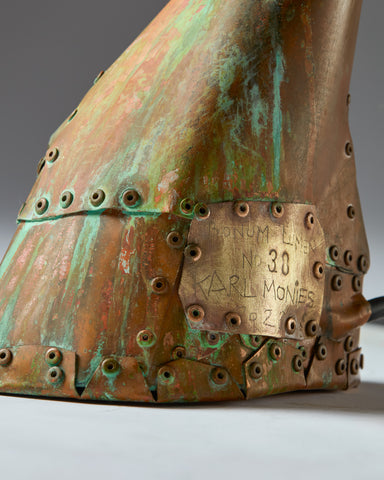
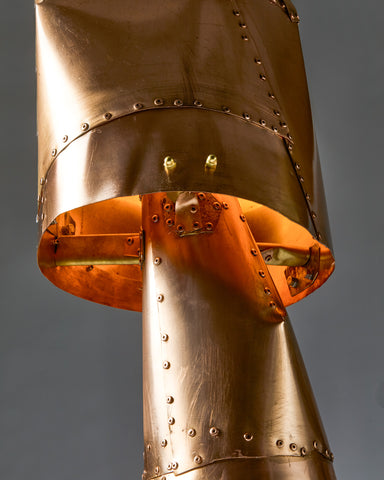
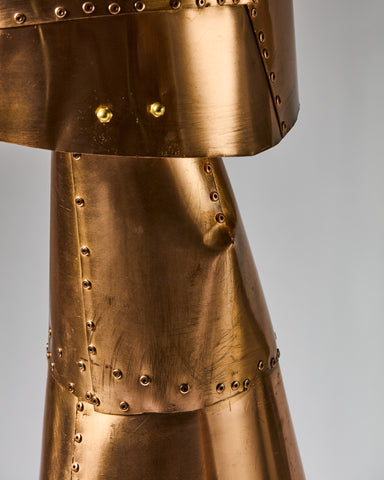
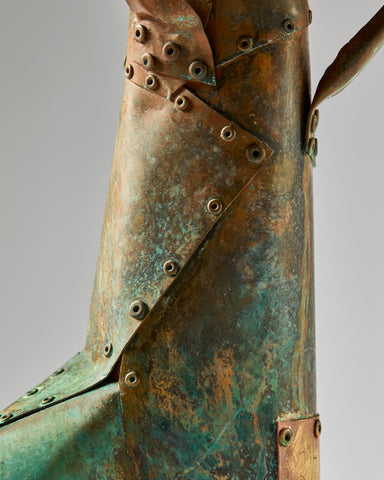
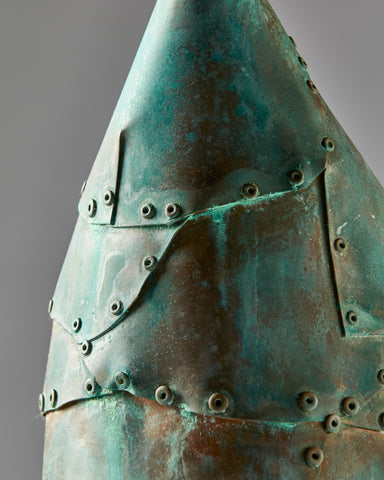
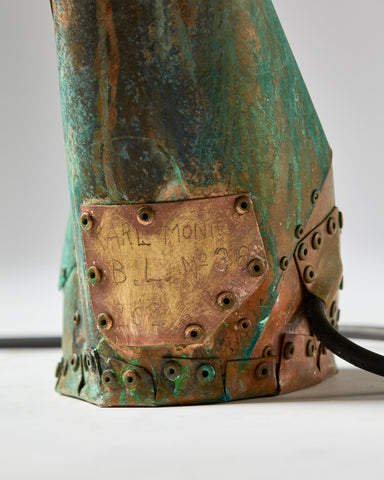
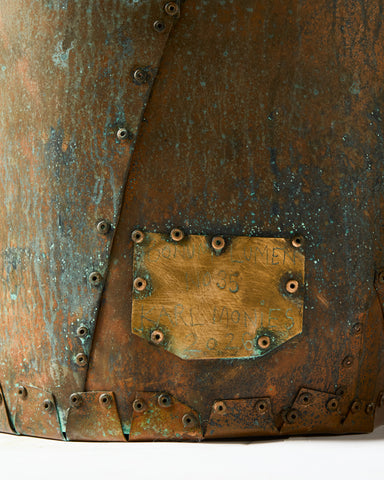
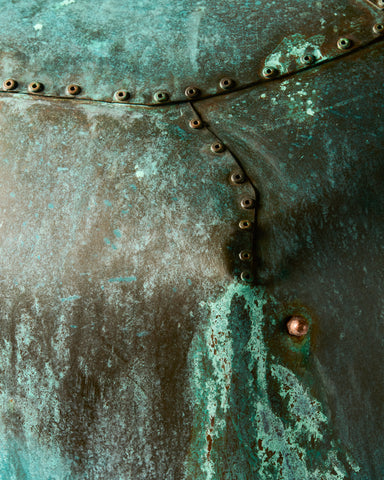
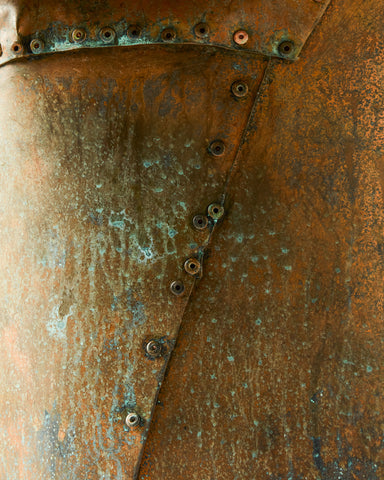
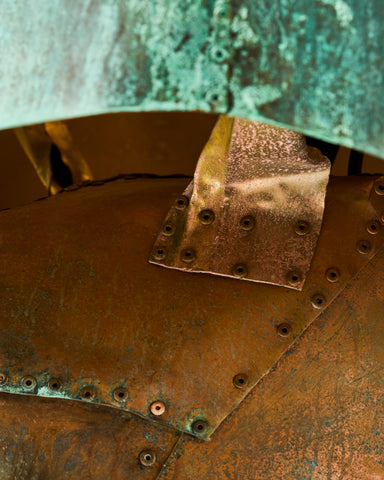
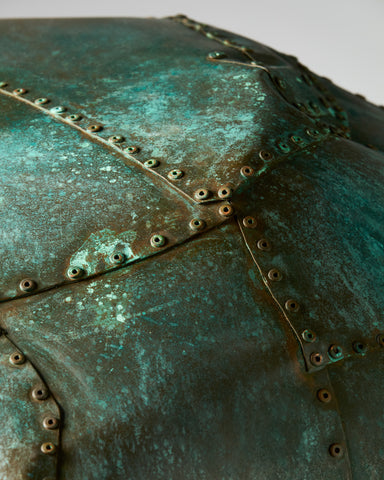
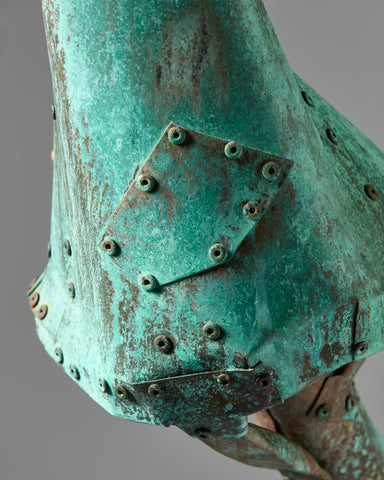
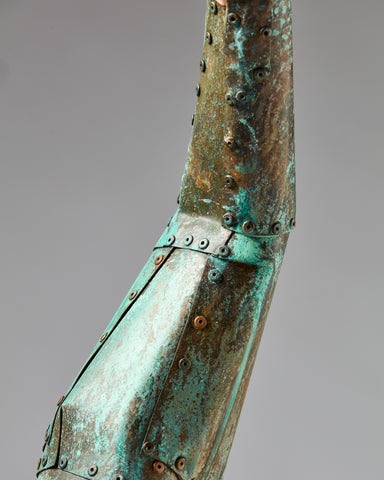
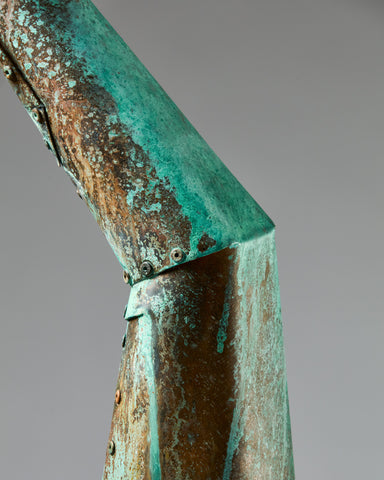
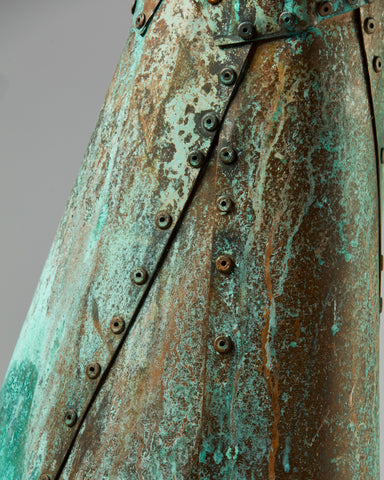
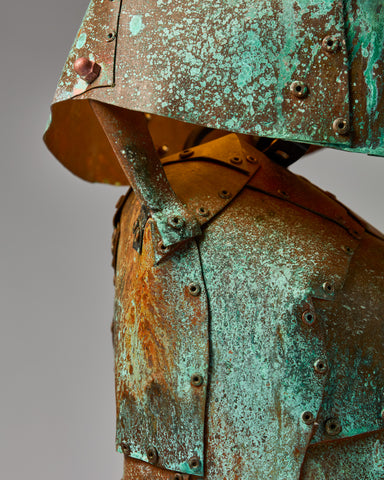
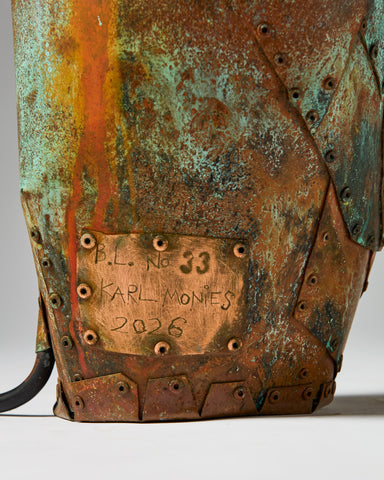
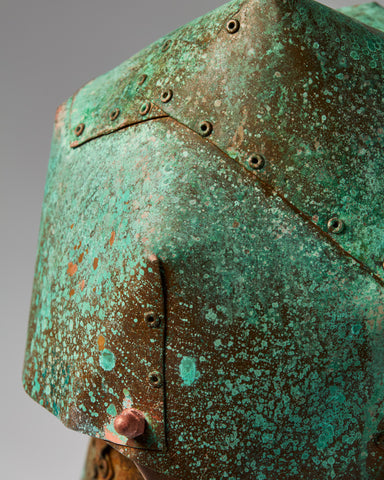
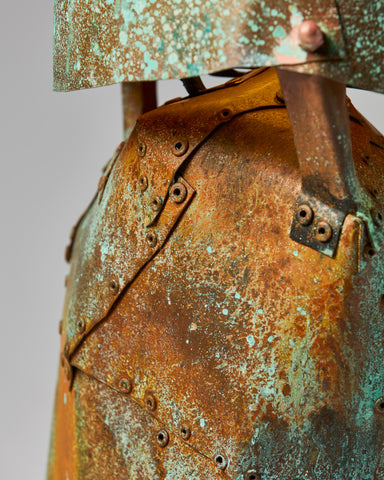
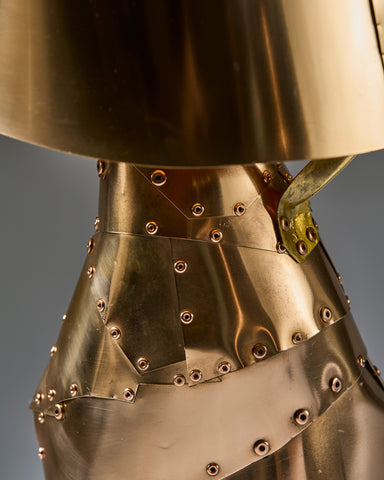
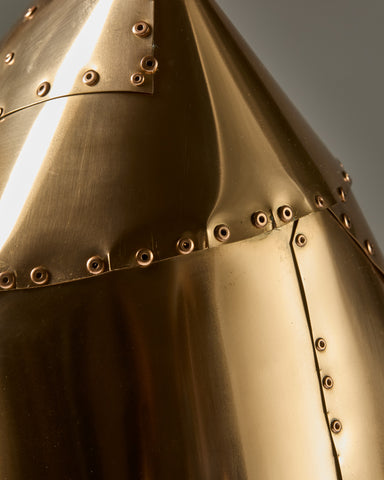
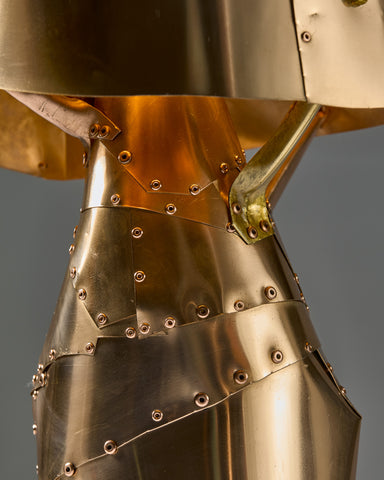
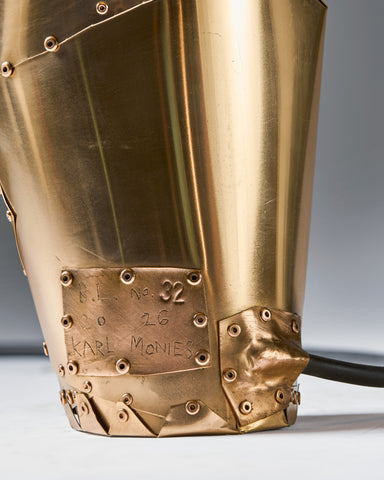
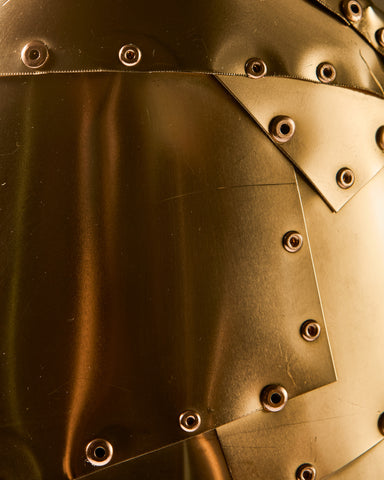
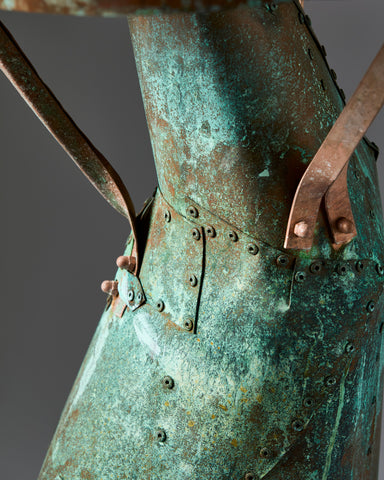
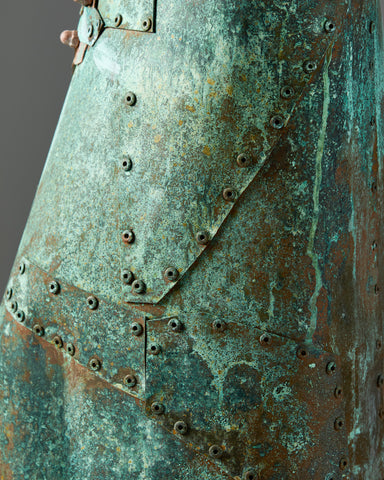
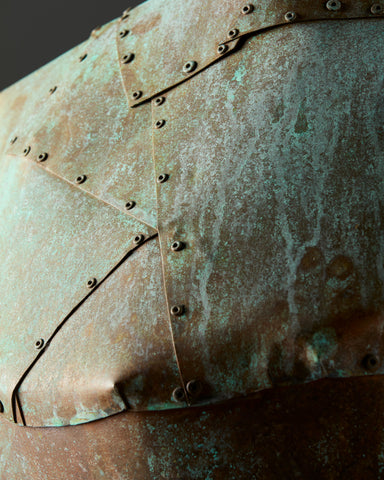
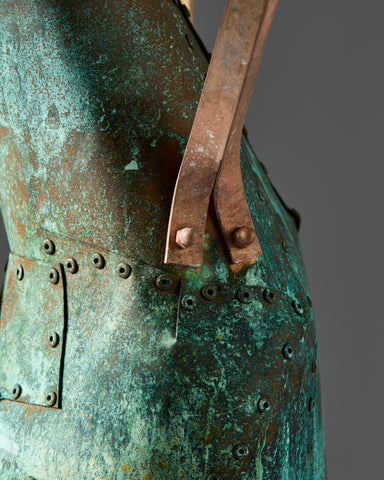
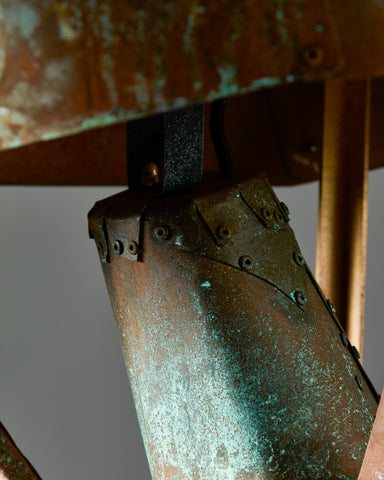
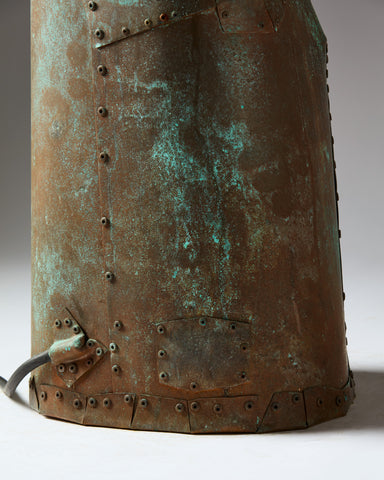
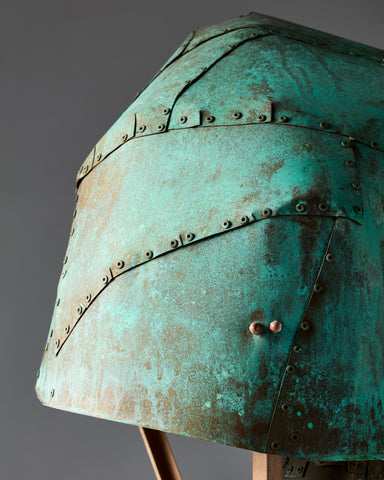
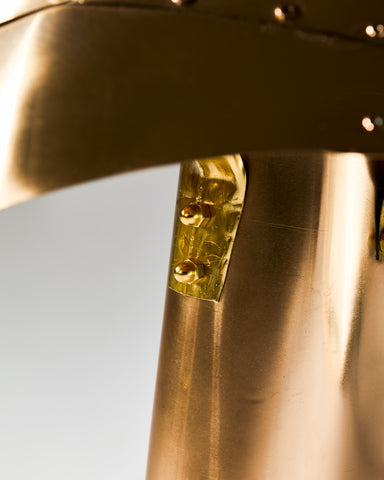
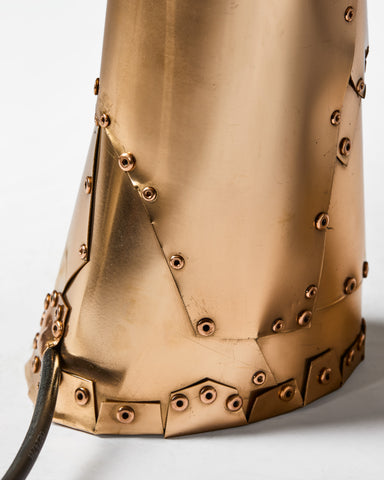
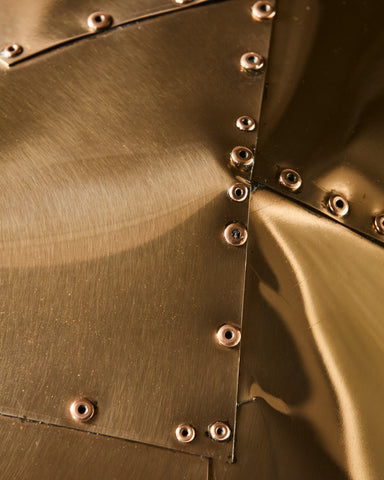
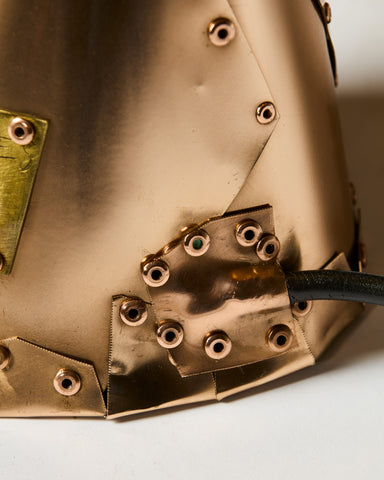
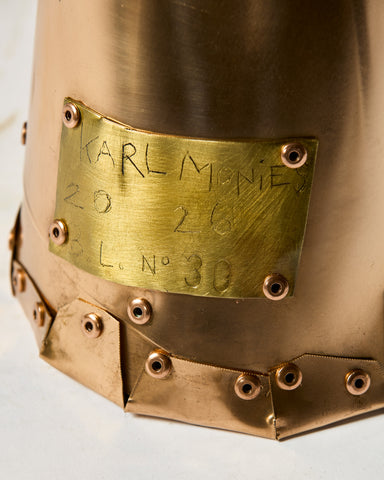
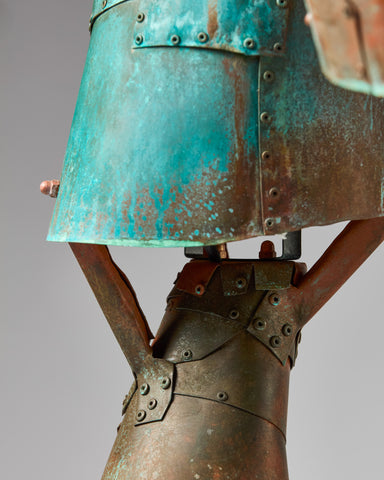
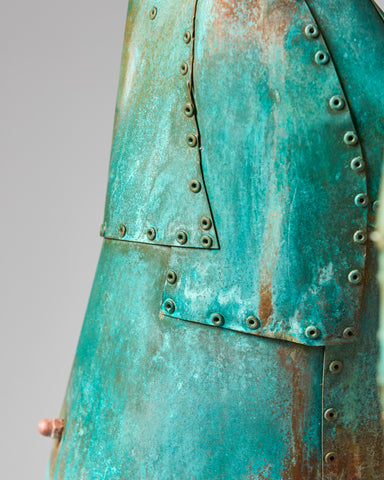
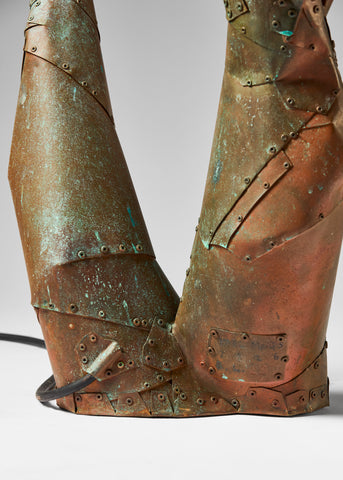
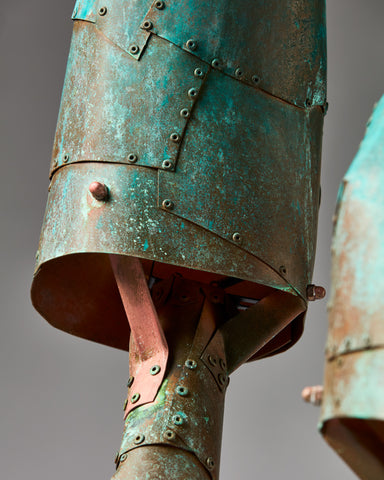
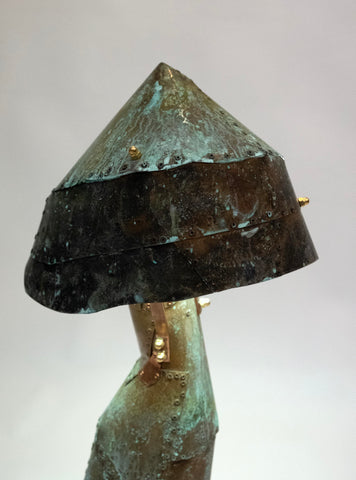
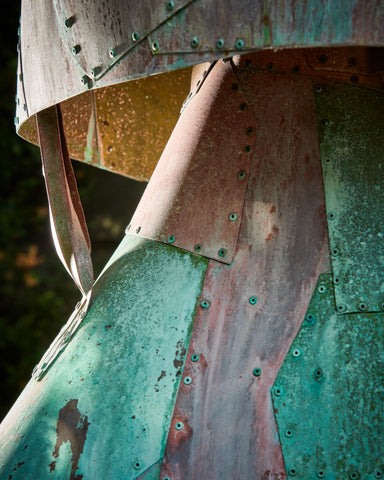
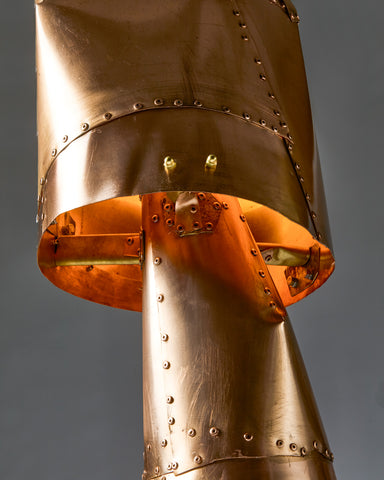
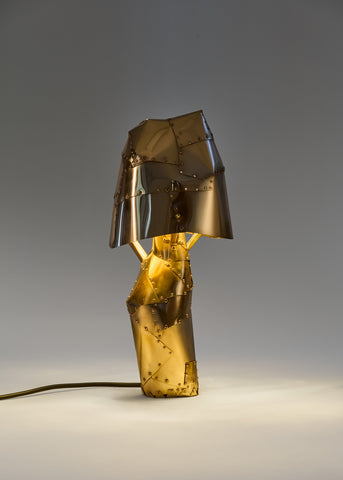
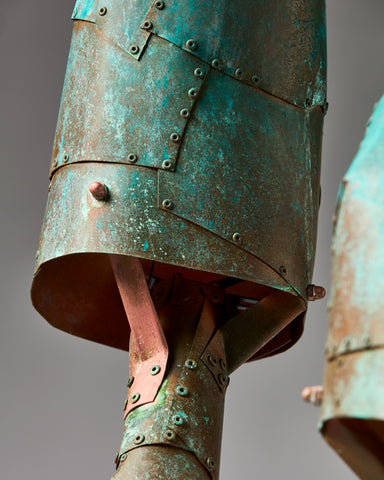
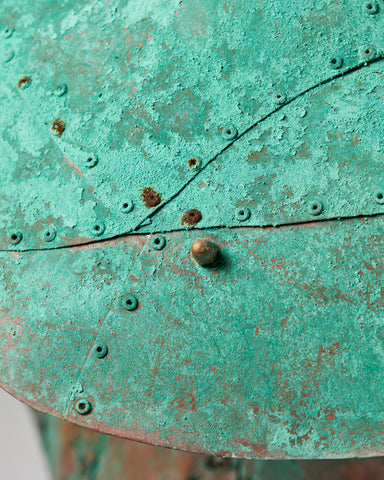
Each sculpture is assembled from copper, brass and bronze joined by visible rivets and brass fittings. Coming to metalworking from outside its conventional training, Monies avoids smooth, seamless soldering in favor of leaving overlaps, joins and corrections exposed, so the surfaces retain evidence of the process by which they came into being. This deliberate naivety toward technique preserves the moment before mastery turns into habit and predictability. The result is a distinctive tension: hammered, swelling silhouettes that read as organic, set against rows of rivets that give the works an engineered, almost steampunk character, at once grown and manufactured.
This ambiguity is intentional: Monies avoids tying the work to a single cultural tradition, instead seeking forms, like the mushroom, or the vessel in his ceramic practice, that are ancient, widespread and rooted in experience shared across cultures. Fungi carry contradictory associations of nourishment, healing, intoxication, decay and destruction, belonging simultaneously to growth and decomposition. Monies is particularly drawn to their historical association with ritual and altered consciousness, including the speculative (and scientifically disputed) idea that psychoactive fungi may have shaped human cognitive development—treated here not as fact but as imaginative proposition.
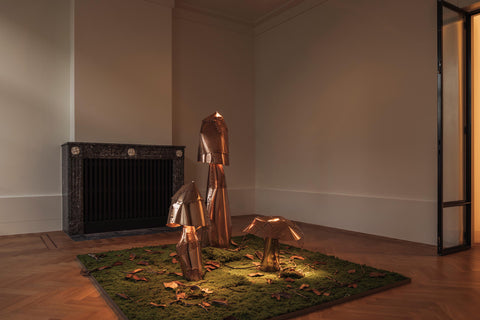
The illuminated works translate this inward association into physical form: light originates inside each object, functioning as both illumination and symbol of awareness and internal transformation. The series' title, Bonum Lumen, is Latin for "good light," suggesting an ethical orientation: attentiveness to the relationships connecting individual life to a larger whole, with species imagined as cells within a shared body.
Metal itself extends this ecological argument: exposed to air and moisture, its surface oxidises and develops a patina over time, so that the environment continues to alter the work's colour and texture after completion. Nature therefore enters the sculptures at multiple levels, as material, as formal inspiration, and as an ongoing agent of change; meaning the work's completion is never absolute. Monies compares this openness to raising children: he can nurture and guide the work, but must ultimately accept it will develop meanings and encounters beyond his control, what he describes as "activating" an artwork, so that it can be entered as image, material, function, symbol or emotional presence rather than through a single fixed reading.
Across the gallery, the sculptures form a provisional ecosystem: distinct fruiting bodies suggesting a shared, invisible origin, their variations evidence of a generative system rather than deviations from a single ideal. Forest Fruits ultimately concerns the wisdom that can emerge when control is temporarily suspended, observing before intervening, and accepting imperfection and complication as conditions of life rather than failures of it.


About the artist
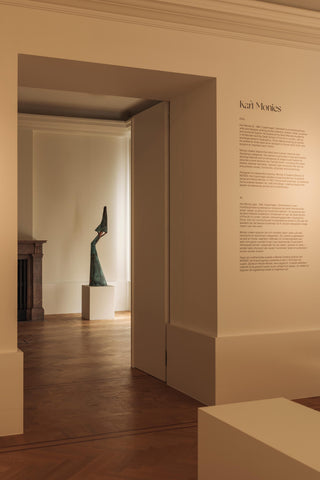
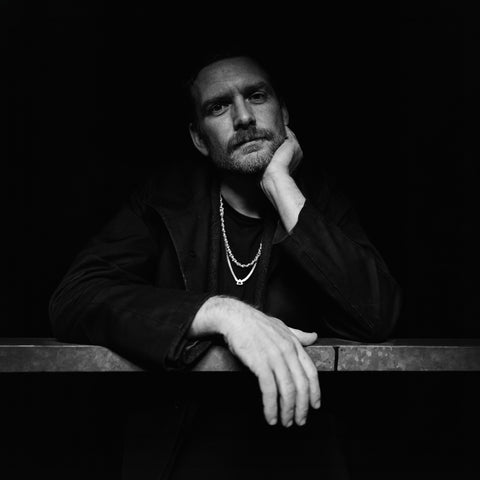
Karl Monies (b. 1984, Copenhagen, Denmark) is a multidisciplinary artist and designer working across ceramics, textiles, metal, sculpture and functional objects. He studied at the Gerrit Rietveld Academie in Amsterdam and the Slade School of Fine Art in London, with an exchange period in Guangzhou, China. Before entering art school, he worked for three years as an assistant to Danish artist Tal R, who became an important early mentor.
Monies creates objects that resist fixed cultural, historical and disciplinary categories. His practice is grounded in play and intuition, allowing materials and circumstances to shape a work before he assumes a more decisive role. Familiar forms—including the vessel, blanket, talisman and lamp—become open structures that can be encountered visually, functionally, physically and symbolically.
Alongside his independent practice, Monies is Creative Director of MONIES, the Copenhagen jewellery house founded by his parents, Gerda and Nikolai Monies, in 1973. Across both practices, he dissolves the boundaries between art, craft and design, creating objects that appear simultaneously ancient and contemporary.