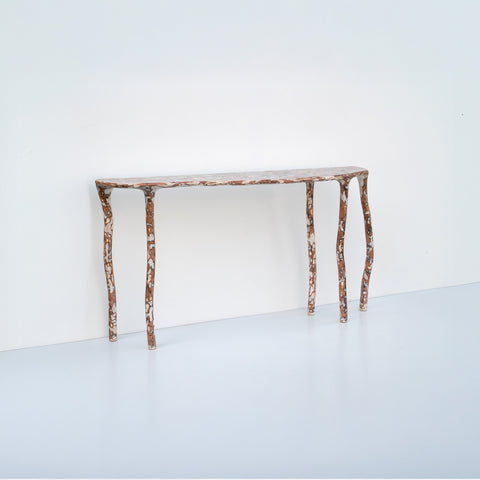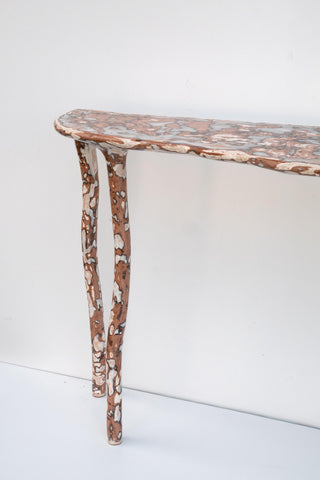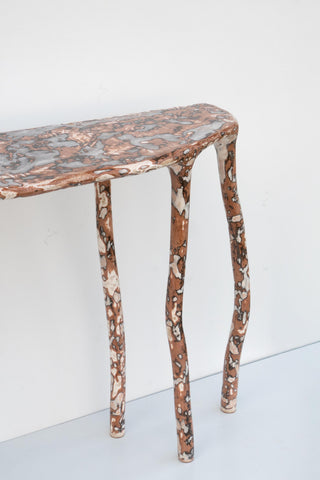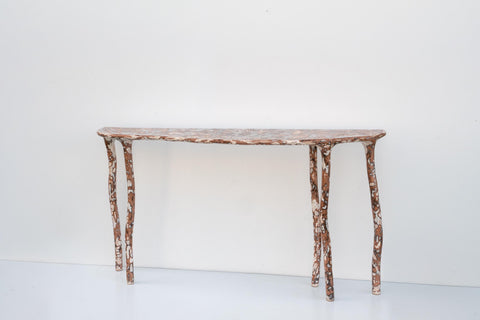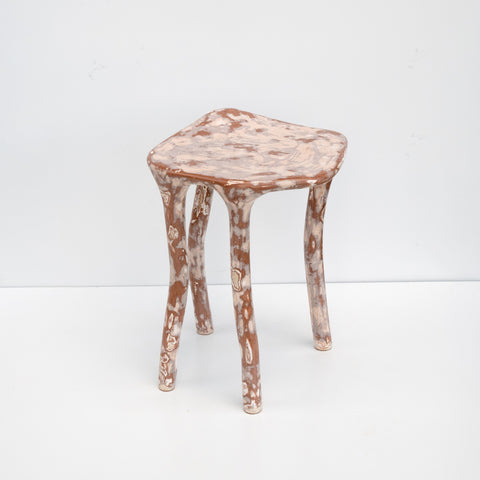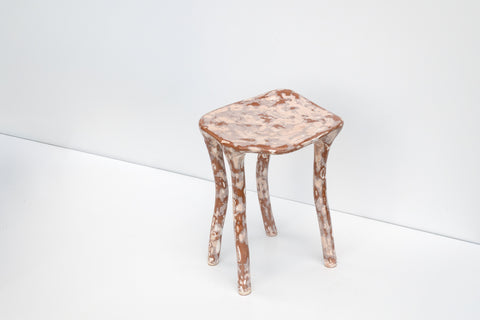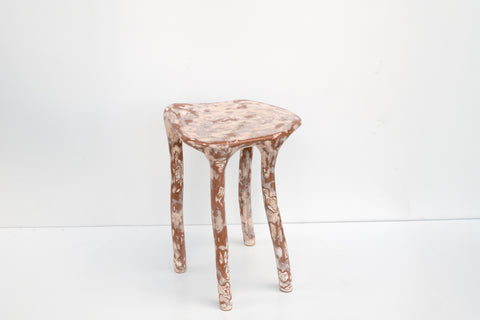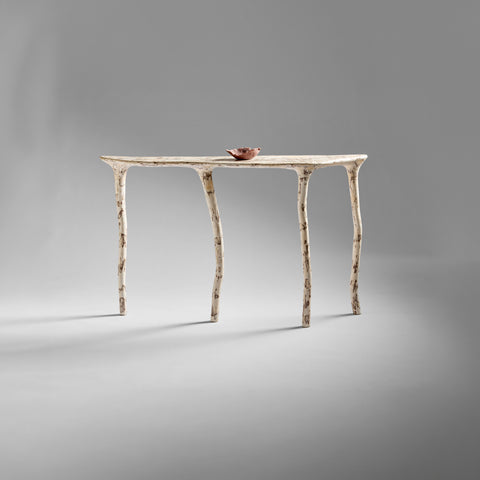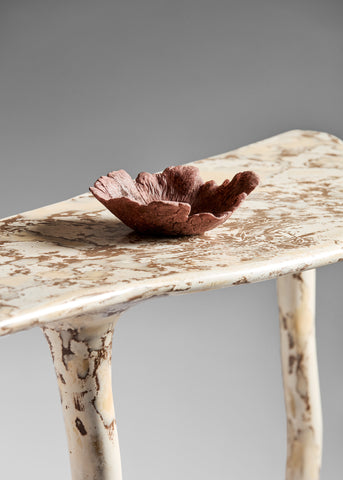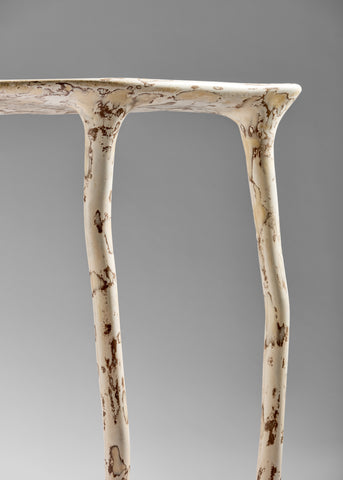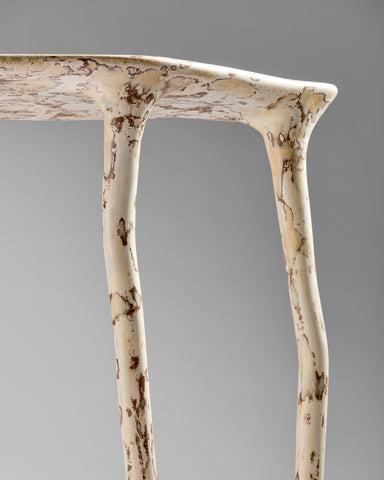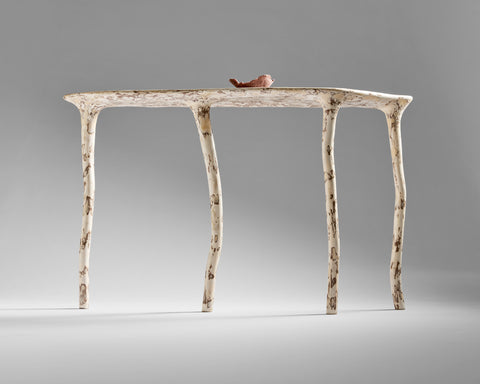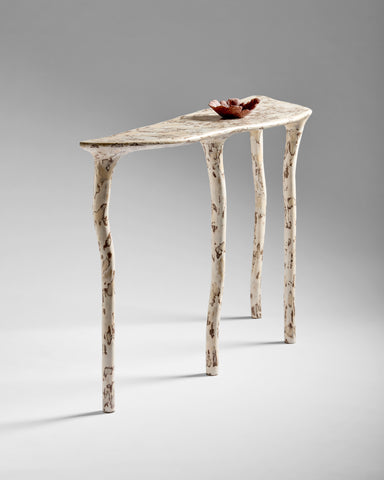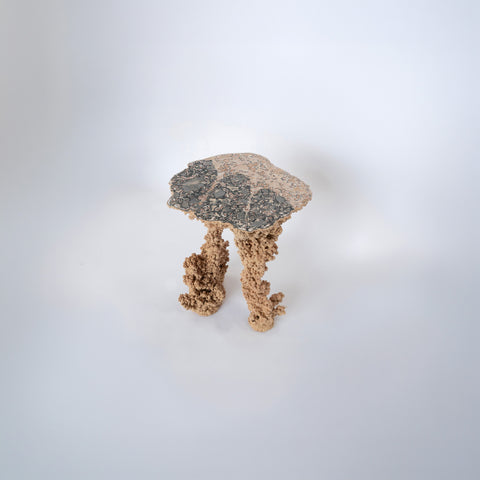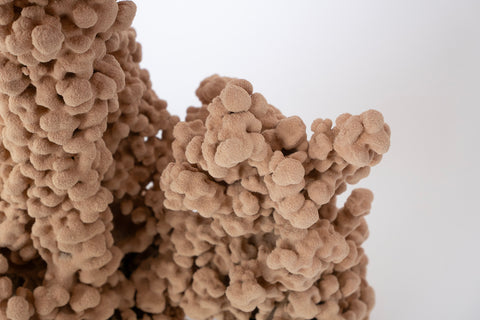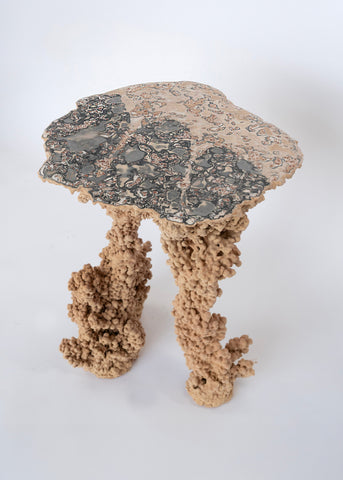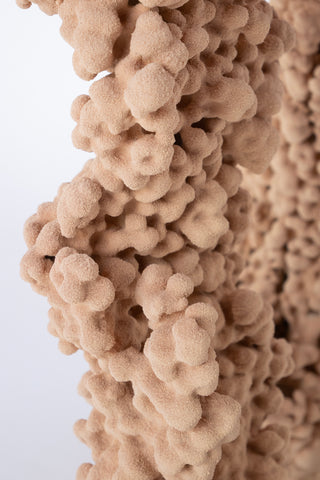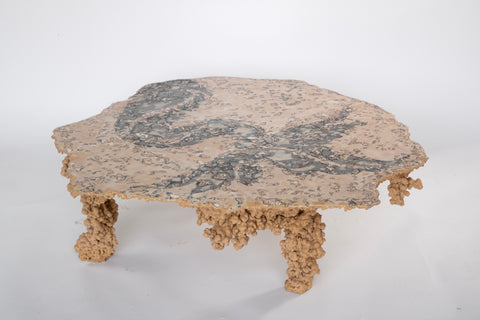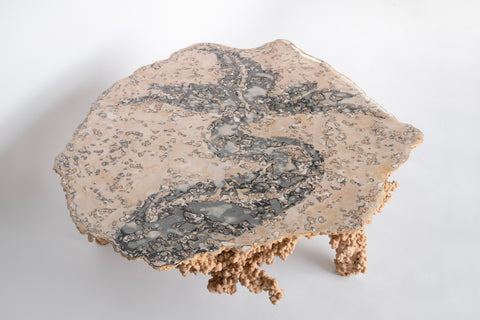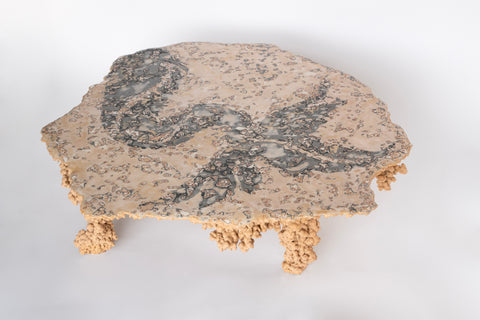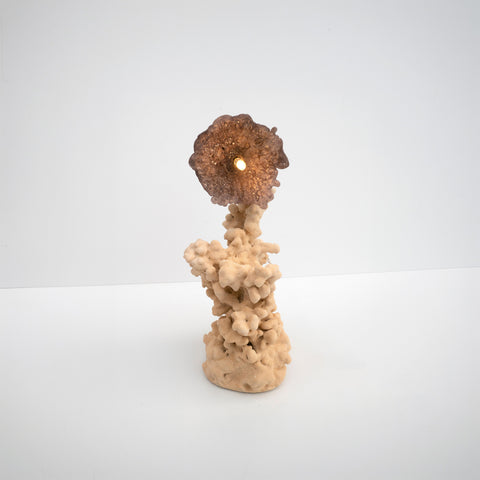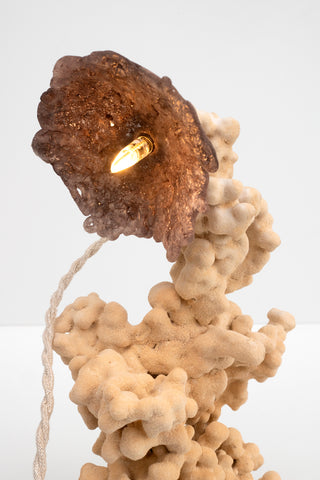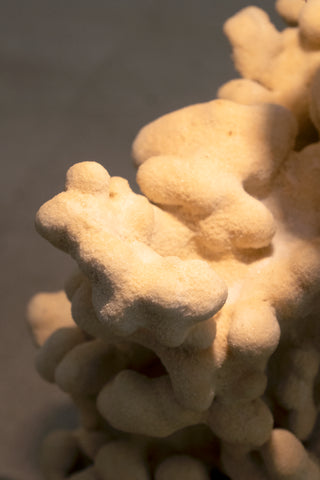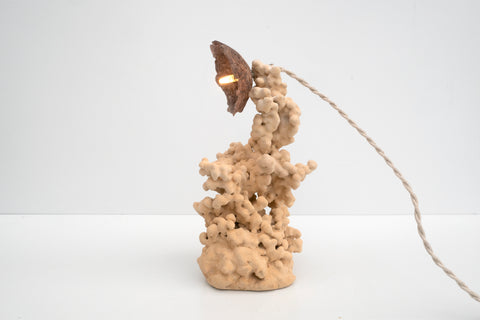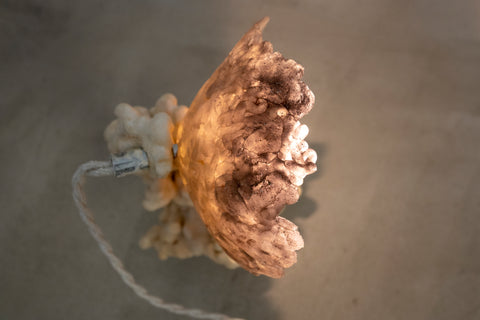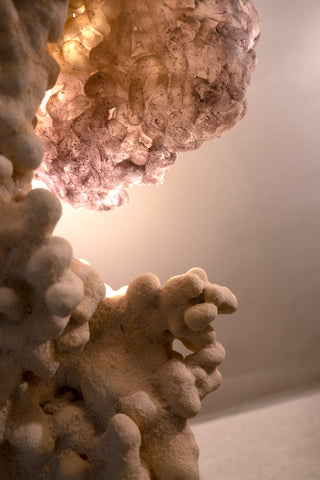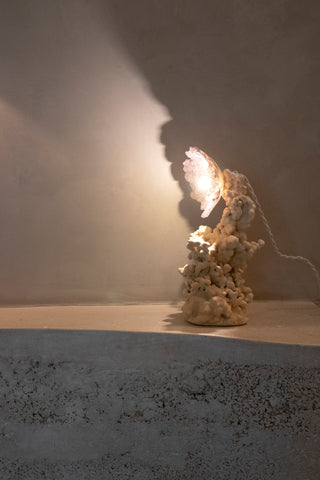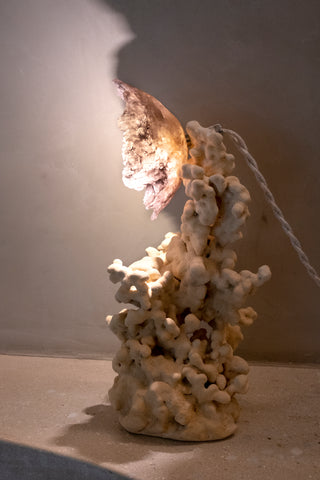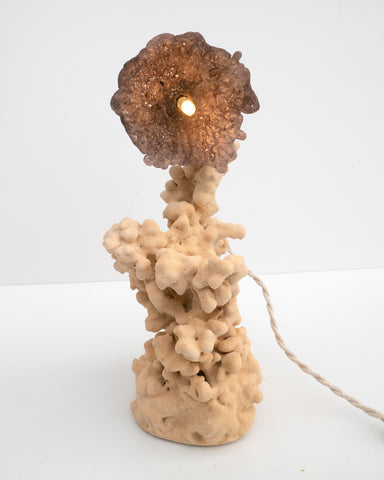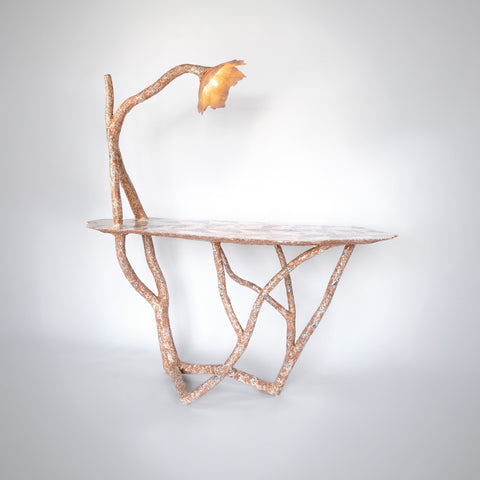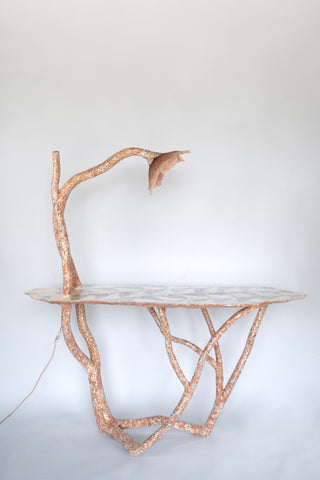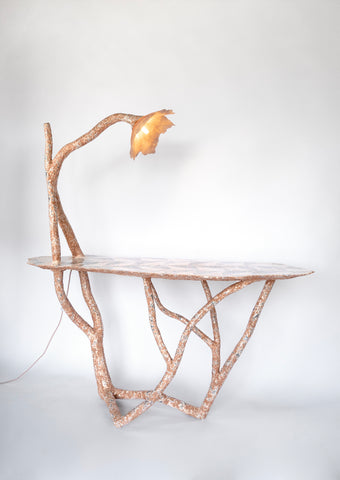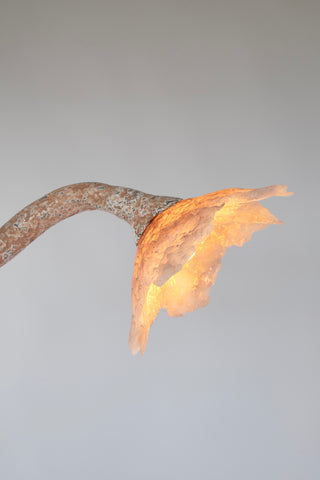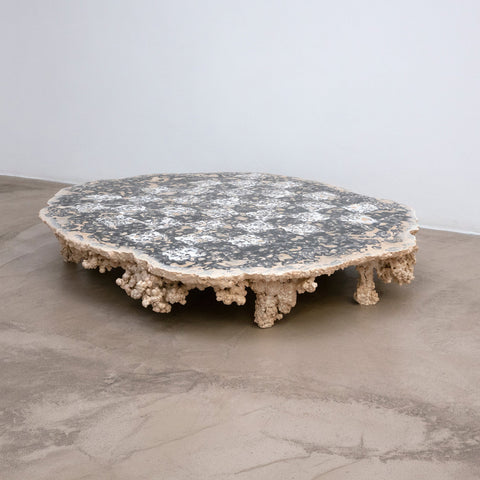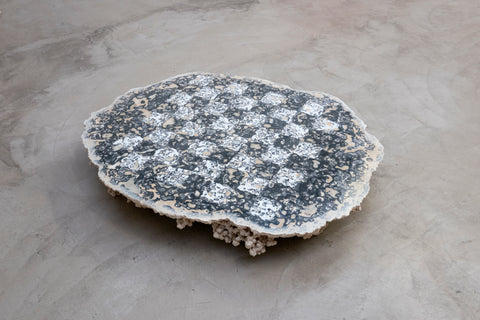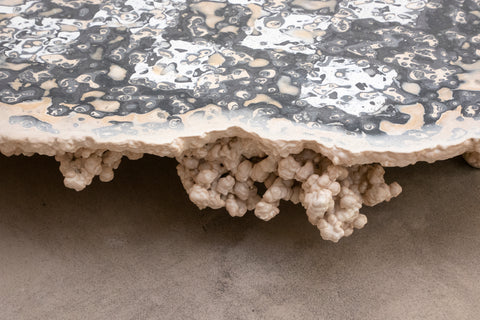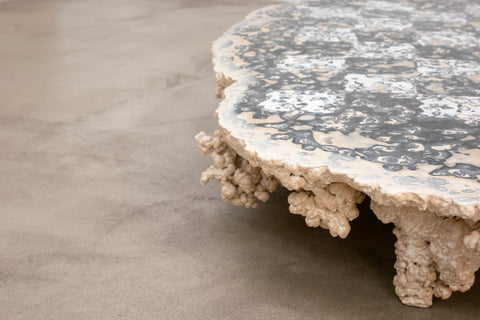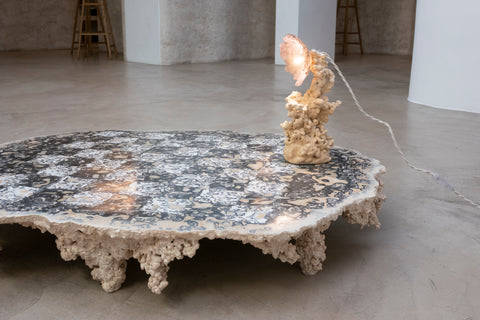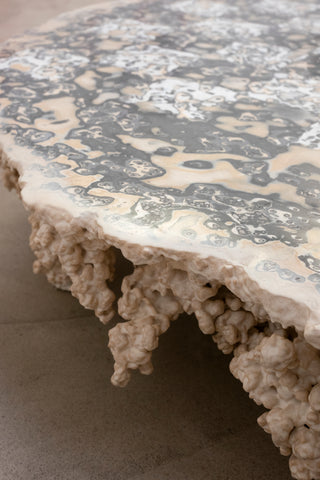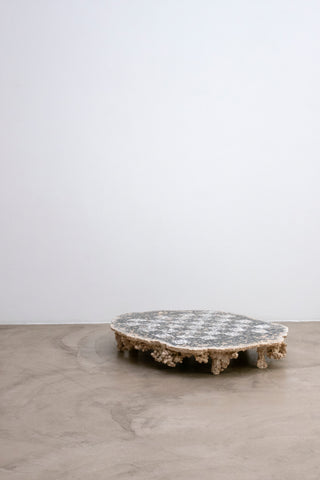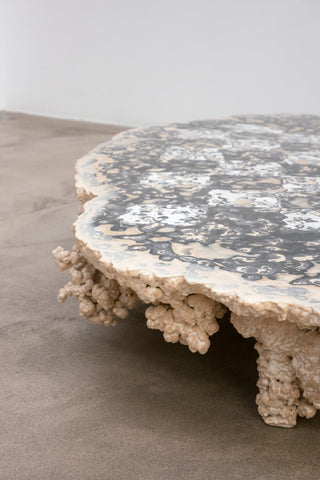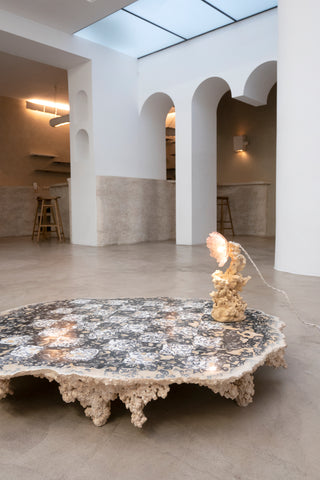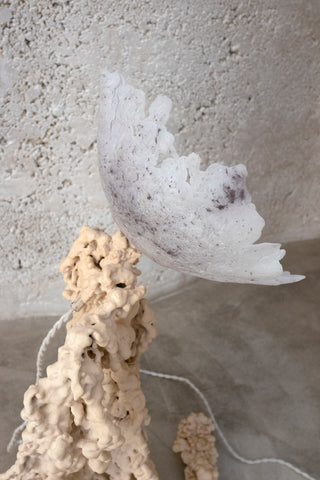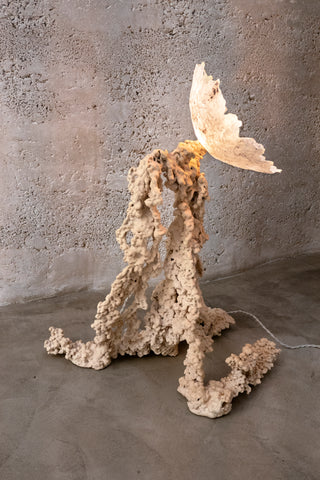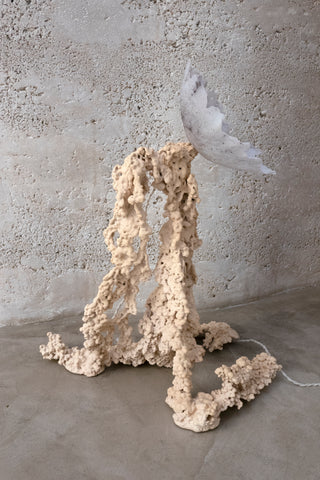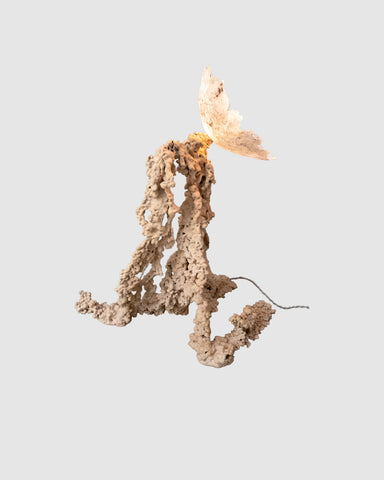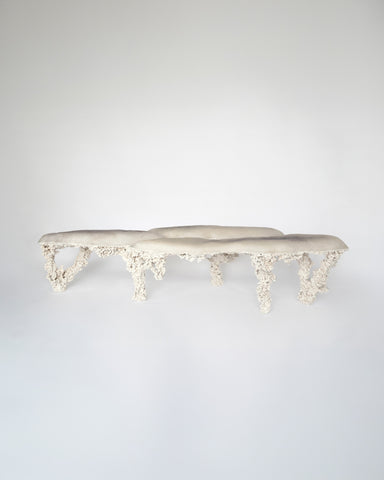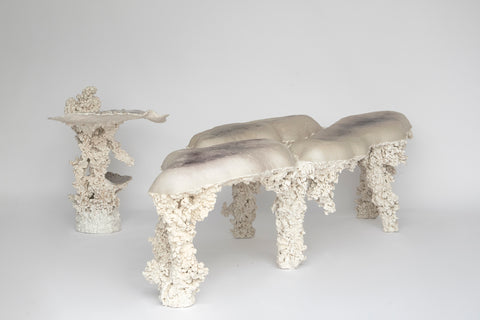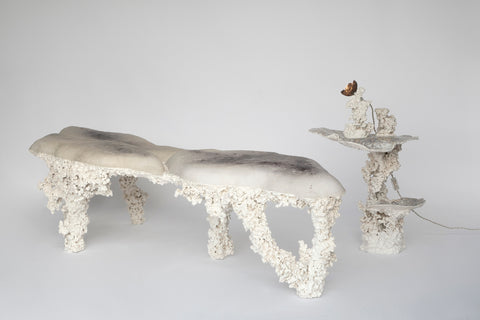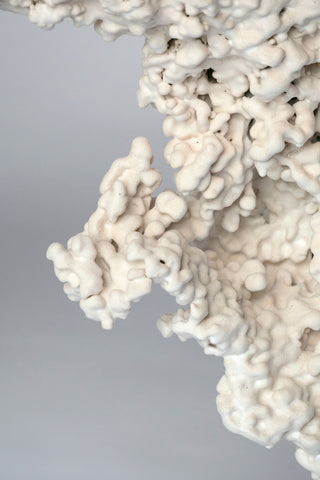


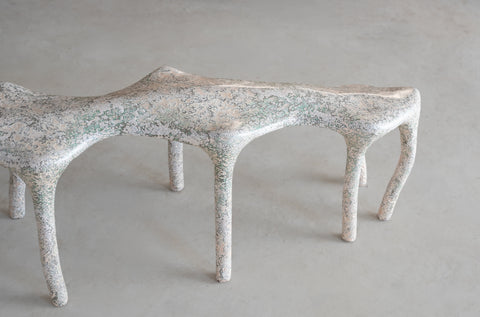
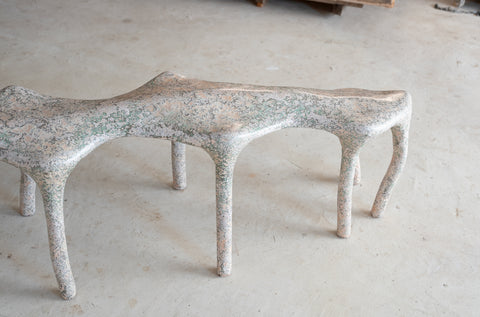
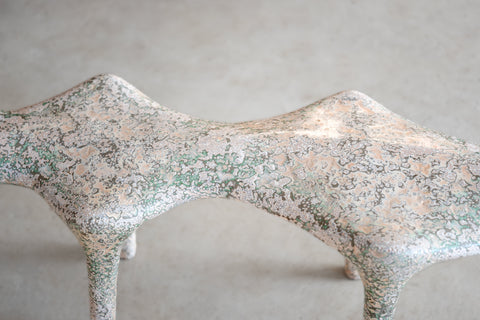
Coenosteum takes its name from the spongy, porous mineral skeleton that binds a coral colony into one mass, a single continuous form. Twelve legs hold the piece close to the ground, as an anchor, a body that has settled.
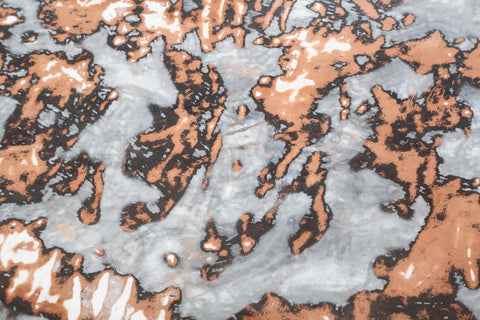
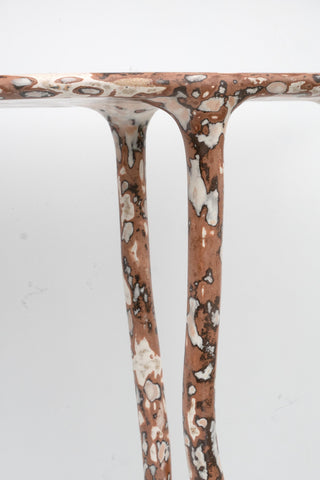
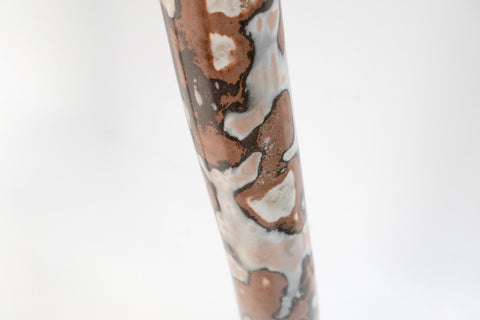
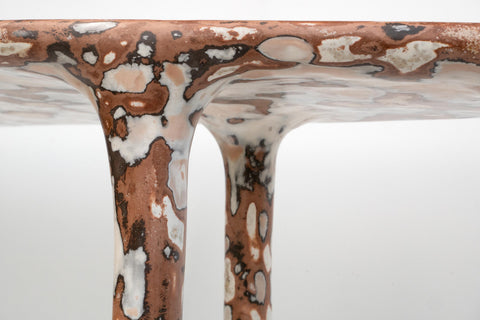
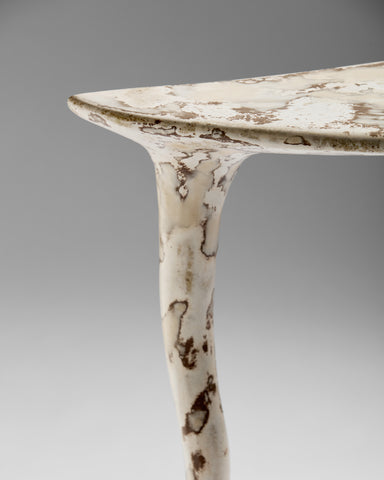
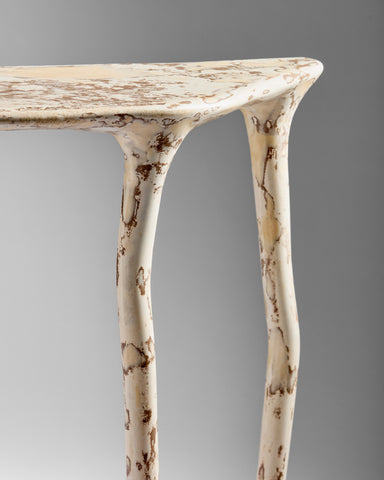
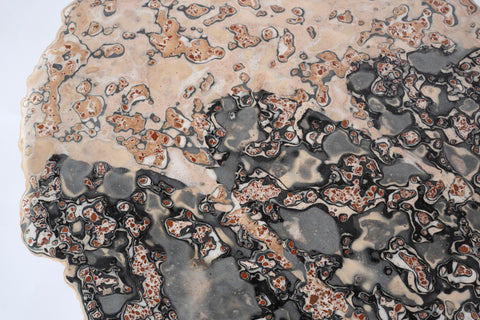
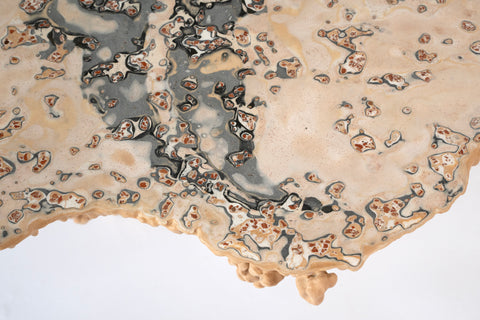
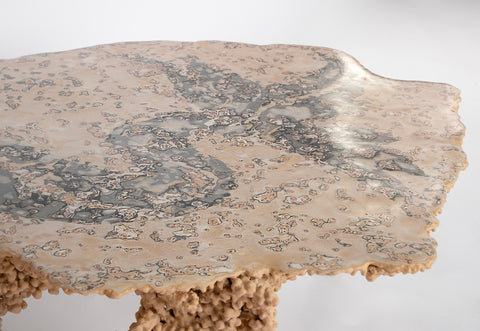
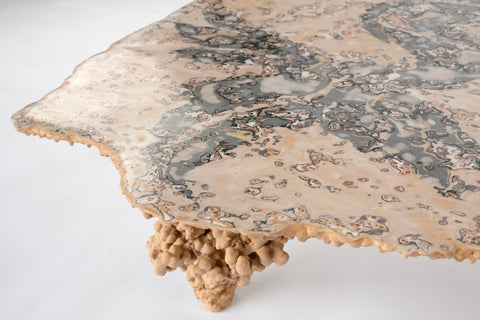
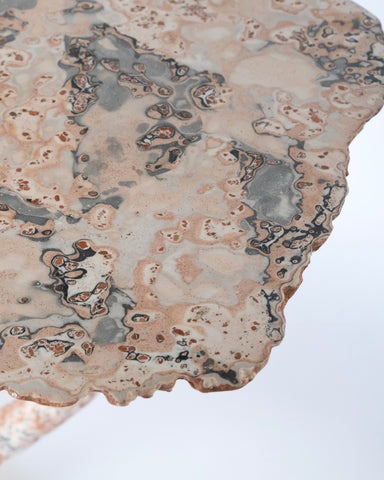
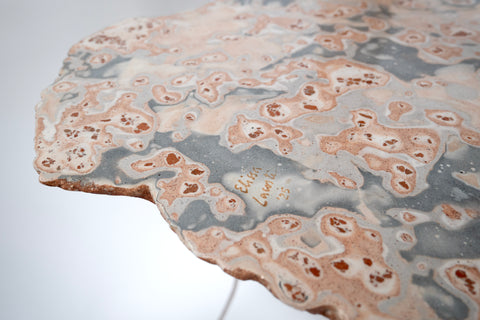
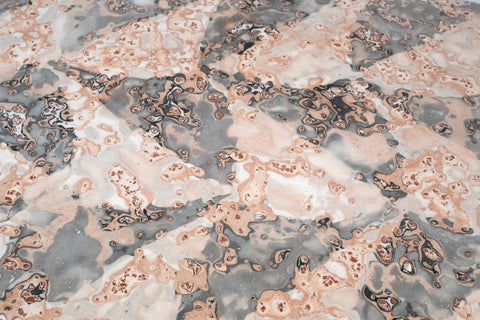
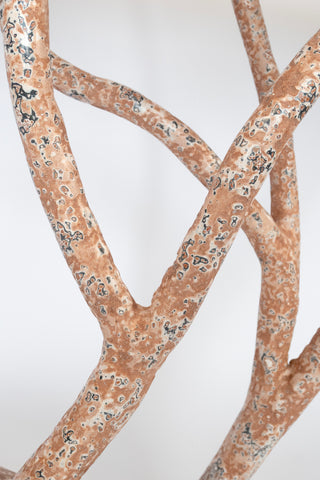
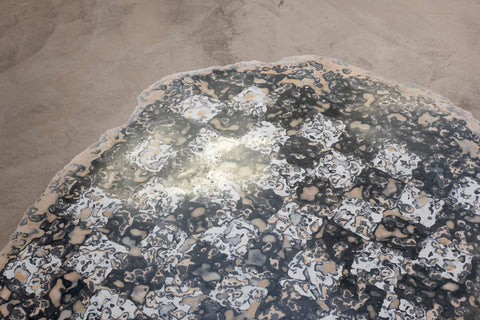
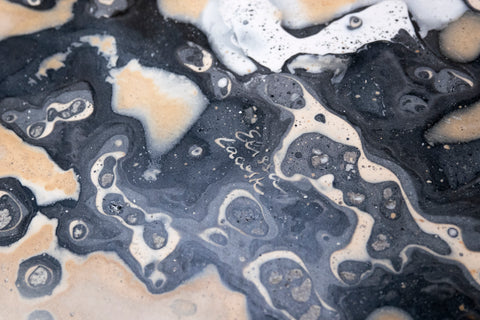
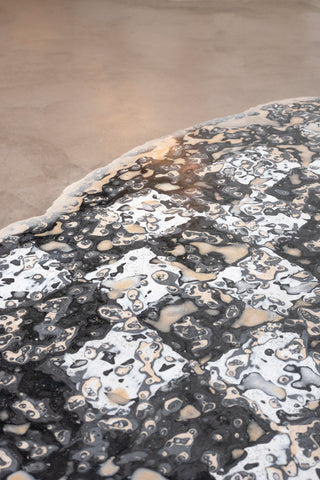
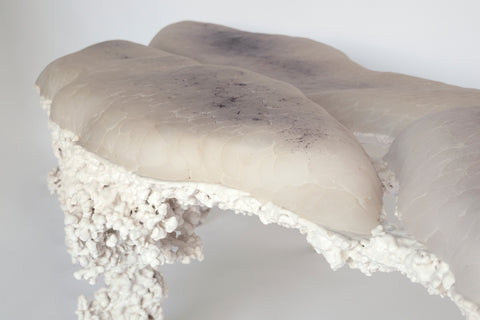
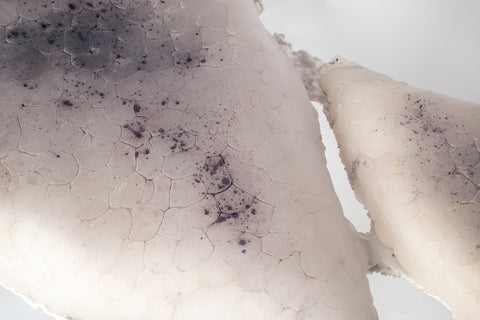
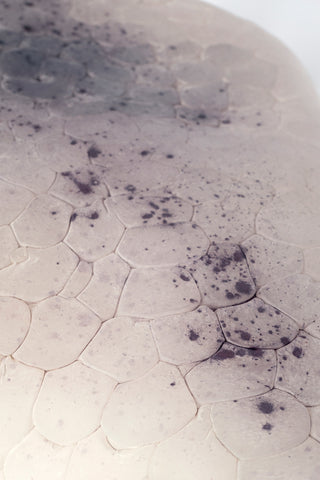
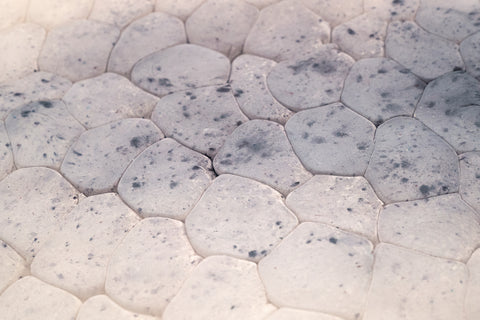
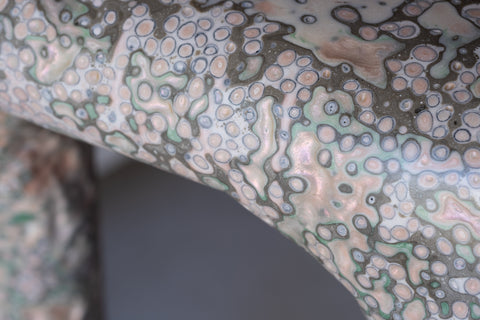
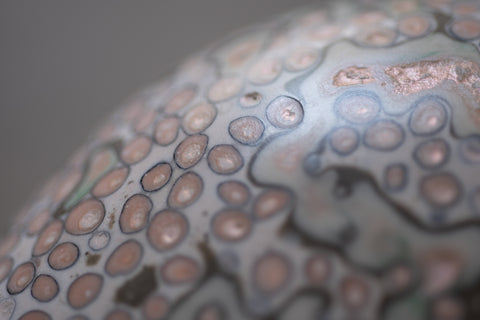
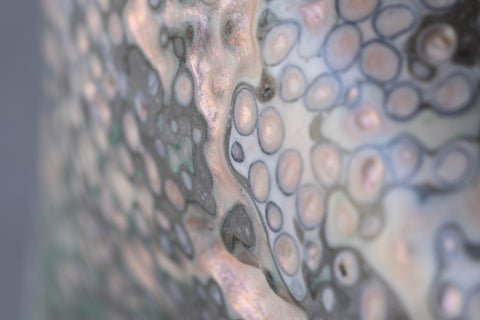
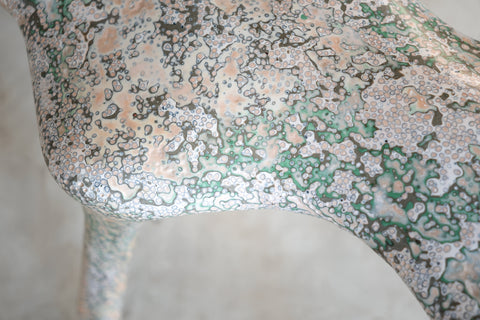
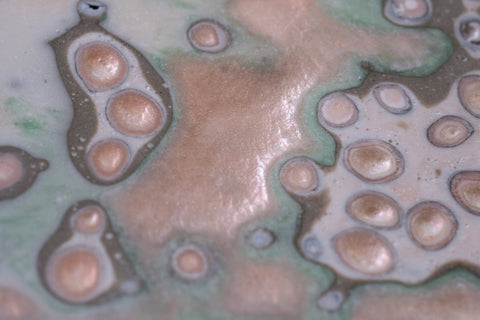
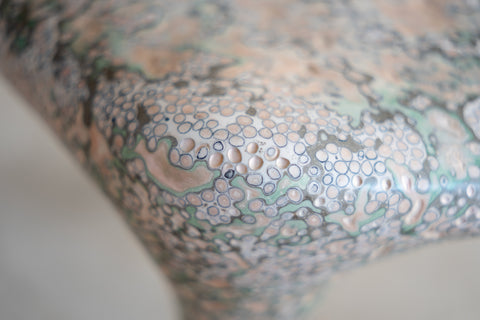
A form that undines, calm and sinuous, carries a hush, as though it came from the benthos, the zone of the sea floor where life clings low, fixed, and slow, where organisms accrete rather than move. On its surface, layer upon layer of pigment gathers into small, cellular beads, pale rose and sage green ringed in darker mineral tone, close in structure to the nacre of an abalone or the ooids that cement themselves, grain by grain, into sedimentary stone.
The form resists the ordinary logic of a bench. There is no flat plane offered in the conventional sense. Instead the piece traces a spine, a long, undulating ridge that narrows into thin hips before dropping into its next arch. The finish is polished to a smooth, waxed gloss, it does not ask to be sat upon so much as straddled, slid along, run a hand across.
Underneath, a frame of reclaimed steel carries the weight, wrapped in a mineral composite and fiberglass shell. Coenosteum remains a body first: mineral, encrusted, but strangely alive to the touch.

Her Collection
Explore all